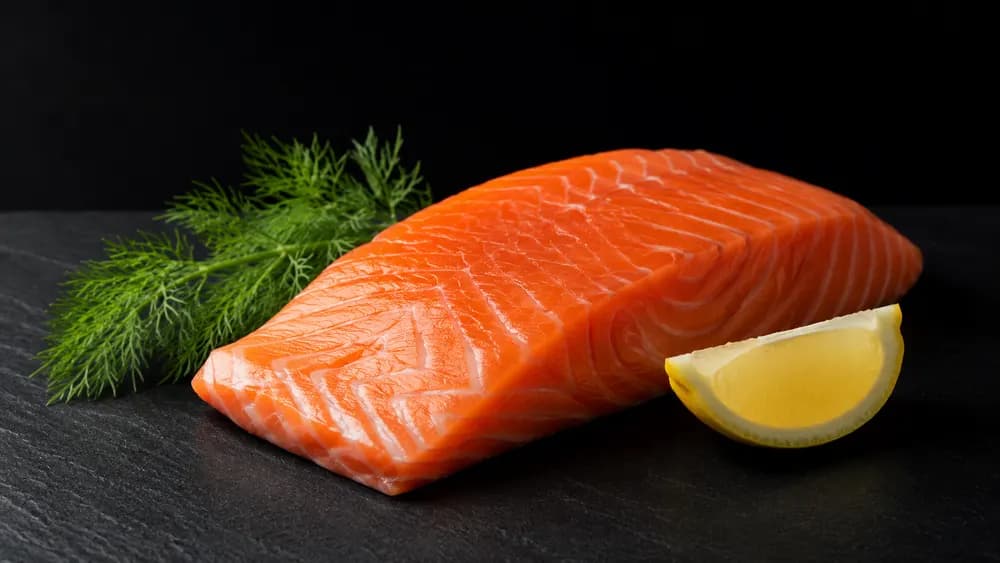
Salmón salvaje
La fuente alimentaria más directa de EPA y DHA, los omega-3 de cadena larga con la evidencia cardiovascular más fuerte. El salvaje ofrece un mejor perfil de ácidos grasos y menos contaminantes que el de piscifactoría.
Nutrición
Macros
Vitaminas
Minerales
Dr. Gundry
Gundry recomienda expresamente el salmón salvaje como una de las mejores fuentes de proteína animal. Su argumento se apoya en dos principios activos: los omega-3 de cadena larga EPA y DHA, que considera resolutores de la inflamación y componentes de membranas celulares sanas, y la astaxantina — el carotenoide rojo que da color al salmón salvaje y actúa como potente antioxidante para membranas y mitocondrias. Ambos faltan en gran medida en el de piscifactoría: la alimentación con cereales/soja desvía el perfil hacia el omega-6, la astaxantina suele ser solo colorante añadido y la carga de contaminantes es mayor. Por eso prefiere especies salvajes pequeñas como el sockeye de Alaska. Las lectinas aquí no son un tema.
Dr. William Li · sistema 5×5
Li destaca el pescado rico en omega-3 sobre todo por la regeneración: EPA y DHA son componentes de toda membrana celular, el DHA en especial para cerebro y retina, y el cuerpo los convierte en resolvinas y protectinas — moléculas de señalización que apagan activamente la inflamación. Más allá de la mera antiinflamación, esto apoya la reparación de tejidos. La angiogénesis y la protección del ADN se benefician además de la astaxantina, uno de los antioxidantes de membrana más potentes. Li apenas invoca aquí el microbioma, ya que el salmón no tiene fibra — su valor está en las grasas, la proteína y los micronutrientes (vitamina D, B12, selenio).
Evidencia Biolazar
La evidencia va más allá del corazón. Cardiovascular: el vínculo entre omega-3 marino y menor mortalidad coronaria es consistente en muchas cohortes (Del Gobbo, n≈45.000) — 1–2 raciones de pescado graso por semana es el punto óptimo más replicado. Cerebro: el consumo regular de pescado se asocia en metaanálisis con un deterioro cognitivo más lento y menor riesgo de demencia — el DHA es un componente central de la materia gris. Inflamación/articulaciones: vía resolvinas, EPA/DHA resuelven activamente la inflamación, con beneficio p. ej. en artritis reumatoide. Además, el salmón salvaje es una de las pocas buenas fuentes alimentarias de vitamina D (~15 µg/100 g) y aporta abundante B12 y selenio. Dos matices honestos: primero, el efecto está ligado al EPA/DHA marino, no al ALA vegetal (solo se convierte un pequeño porcentaje). Segundo, los contaminantes — las especies pequeñas y de vida corta (sockeye, sardina) llevan menos mercurio, y el salvaje suele tener menos contaminantes y antibióticos que el de piscifactoría.
Cómo usar
1–2 raciones (100–150 g cada una) por semana. Prefiere salvaje (sockeye, Alaska) al de piscifactoría. Cocina con suavidad (evita el sellado a fuego fuerte) para preservar los frágiles omega-3. ¿No comes pescado? El aceite de algas aporta EPA/DHA directamente.
