Blackberries
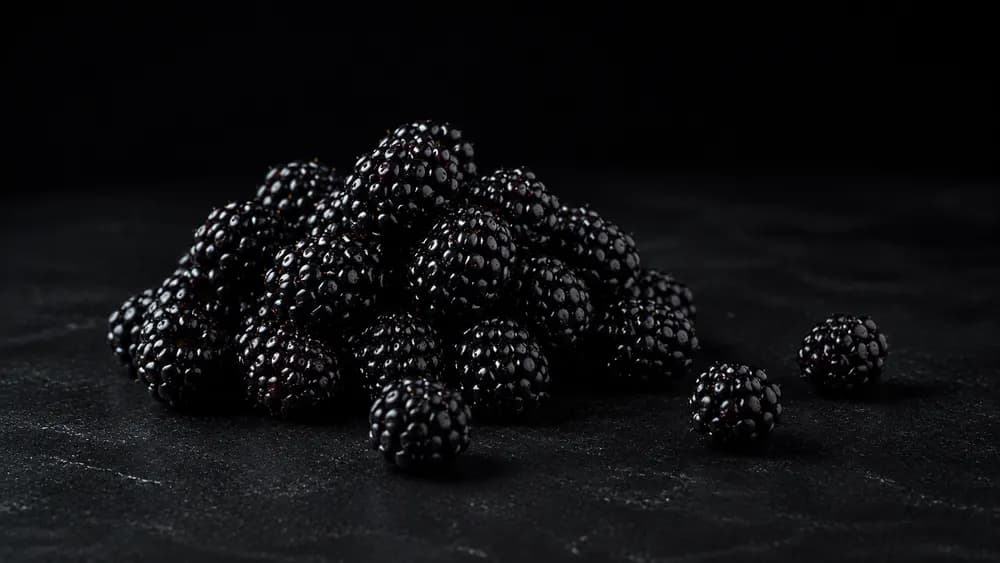
The darkest of everyday berries — and thus one of the richest in anthocyanins. Very low sugar, high fiber and vitamin K. Like all berries, on Gundry's yes-list.
Nutrition
Macros
Vitamins
Minerals
Dr. Gundry
Blackberries meet Gundry's criteria for recommended fruits to a T: very low glycemic load, a dense polyphenol profile and plenty of fiber. Their deep color signals an especially high anthocyanin content, which he views as desirable. No separate caveat.
Dr. William Li · 5×5 system
Li rates dark berries highly for anthocyanin density: blackberries supply especially large amounts of the antioxidant pigment that buffers DNA damage and supports vascular function. Their high fiber fosters butyrate-producing gut bacteria; vitamin K contributes to vascular and bone health.
Biolazar evidence
Blackberries share the good berry evidence: anthocyanin-rich diets are linked in cohorts to lower cardiovascular risk and, in smaller RCTs, to better endothelial function. Long-term studies specific to blackberries are missing; the benefit derives from the berry group as a whole. Practically, they stand out for by far the lowest glycemic index of this selection (~25) at high nutrient density.
How to use
Fresh in season (late summer) or frozen year-round. At ~25 the lowest glycemic index among the berries listed here — ideal for anyone keeping blood sugar especially flat. As a topping, in smoothies or plain. The seeds add extra fiber.
