Buckwheat
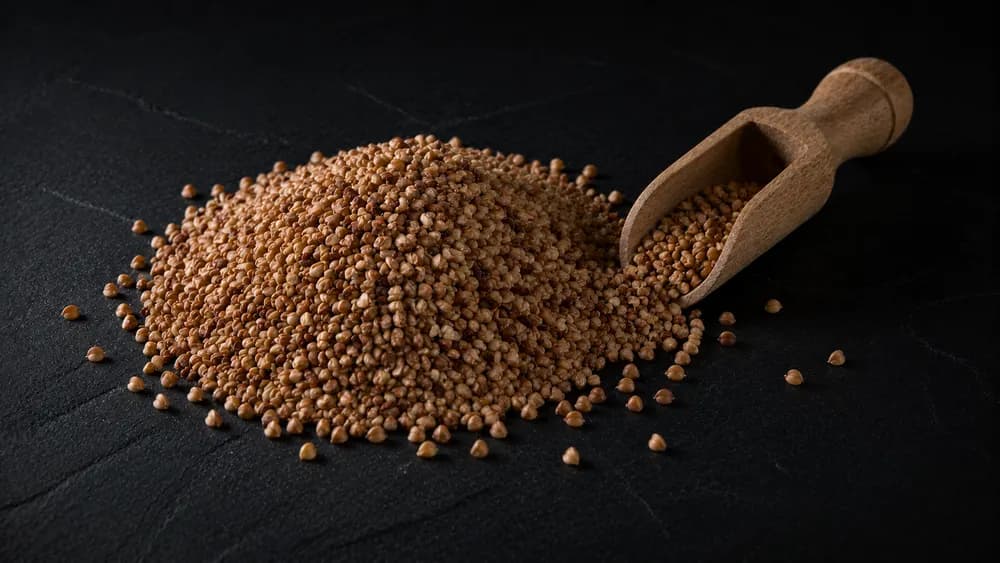
Despite the name, neither wheat nor a grain but a gluten-free pseudo-cereal from the knotweed family. The only notable dietary source of the flavonoid rutin, and a favorite for blood sugar and blood vessels.
Nutrition
Macros
Vitamins
Minerals
Dr. Gundry
Buckwheat is a pseudo-cereal and thus falls in the same critical category as quinoa. Gundry lists it on his no-list because it contains lectins. Unlike quinoa he gives no clear clearance recipe — he points generally to soaking and heating but prioritizes avoidance. Its gluten-free status is no free pass for him, since his model centers on the lectins, not the gluten.
Dr. William Li · 5×5 system
Buckwheat scores broadly for Li: high resistant starch and fiber for the microbiome, plus the flavonoid rutin, which stabilizes capillaries and acts as an antioxidant (angiogenesis, DNA protection). Its complete amino-acid profile, rich in lysine, supports regeneration. Rutin makes it functionally especially interesting among the pseudo-cereals.
Biolazar evidence
Buckwheat combines a low glycemic index (~45), complete protein and, as the only common dietary source, meaningful amounts of rutin. Smaller studies suggest favorable effects on postprandial glucose and blood lipids; hard long-term endpoints are missing, as with most pseudo-cereals. Gluten-free and thus suitable for celiac disease. Gundry's lectin concern is mechanistic, without robust clinical endpoints in healthy people — soaking and cooking reduce the lectin load anyway.
How to use
Whole buckwheat groats (raw or as roasted kasha) 1 part to 2 parts water, simmer about 15 minutes. Buckwheat flour makes gluten-free pancakes, galettes and noodles (soba). Rinse briefly before cooking. A good gluten-free stand-in for rice or bulgur.
Related compounds
Sources
- Li et al. (Crit Rev Food Sci Nutr 2019): Buchweizen, Rutin und kardiometabolische Effekte — Review
- Qiu et al. (Food Chem 2016): Buchweizen und postprandiale Glukoseantwort
- Aune et al. (BMJ 2016): Vollkornkonsum und Gesamtmortalität — Meta-Analyse
- Giménez-Bastida & Zieliński (J Agric Food Chem 2015): Bioaktive Verbindungen in Buchweizen
