Dragon Fruit
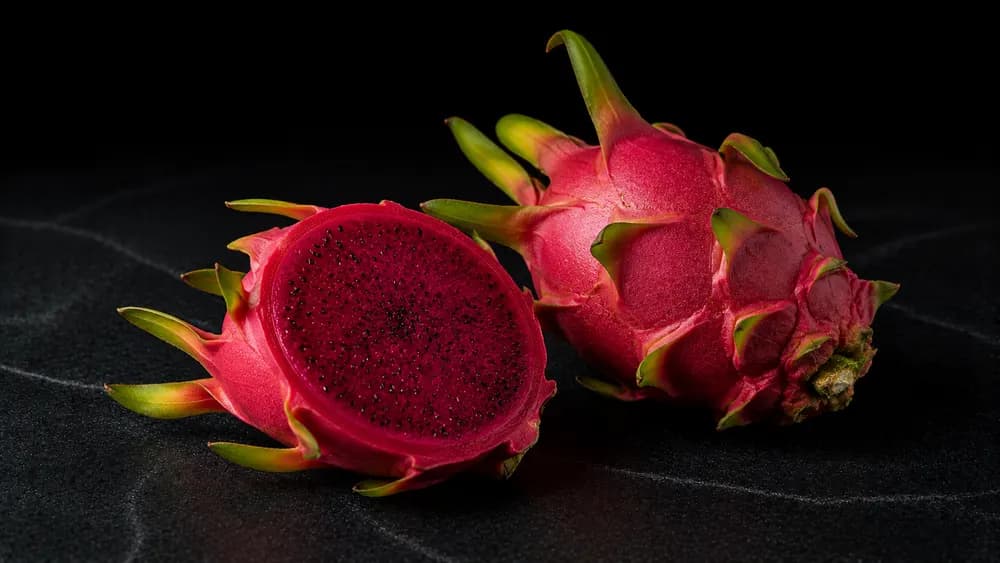
The photogenic cactus fruit: mild, fiber-rich and with prebiotic oligosaccharides for the microbiome — the red flesh adds betalains. A solid but overrated fruit: the vitamin C content is lower than assumed, and local berries are more nutrient-dense.
Nutrition
Macros
Vitamins
Minerals
Dr. Gundry
Dragon fruit is botanically not a berry but a cactus fruit — and Gundry limits fruit in general because of fructose. The conditional here is mild, though: the glycemic load stays moderate, the fiber content is good, and the tiny black seeds add extra fiber and a little fat. The red flesh contains betalains — the same polyphenol class as in beetroot — which he would rate as valuable. In moderation and seasonal it fits; as a dried or sweetened version he rejects it.
Dr. William Li · 5×5 system
For Li, dragon fruit is above all a microbiome fruit: its flesh and seeds contain prebiotic oligosaccharides that, in studies, promote the growth of bifidobacteria and lactobacilli. The red flesh supplies betalains with antioxidant, DNA-protective effects (far less in the white flesh). Fiber and some vitamin C round out the profile. For angiogenesis and regeneration there are hardly any specific data — here it is a solid but unspectacular fruit.
Biolazar evidence
The solid core lies in the gut and the betalains. Microbiome: cell and animal studies plus early human data show that dragon fruit's prebiotic oligosaccharides foster beneficial gut flora — the best-grounded effect. Antioxidant: the red flesh is rich in betalains (like beetroot), strongly antioxidant in vitro. Metabolism: smaller studies suggest moderate effects on blood sugar and blood lipids, but they are inconsistent and small. Honest framing: contrary to the Instagram image, the vitamin C content is rather low and the overall nutrient density moderate — local dark berries deliver more polyphenols and vitamins per serving, often cheaper and with better evidence. A tasty, fiber-rich change with a good microbiome argument, but not a superfood.
How to use
Enjoy ripe (yields to gentle pressure) and chilled — scoop or dice the flesh, in fruit salad or a smoothie. The red varieties provide more betalains than the white; eat the small black seeds too (fiber, a little fat). Fresh rather than dried — dried fruit is heavily sugar-concentrated. As a varied addition, not a replacement for more nutrient-dense local berries.
