Dark Chocolate (85%+)
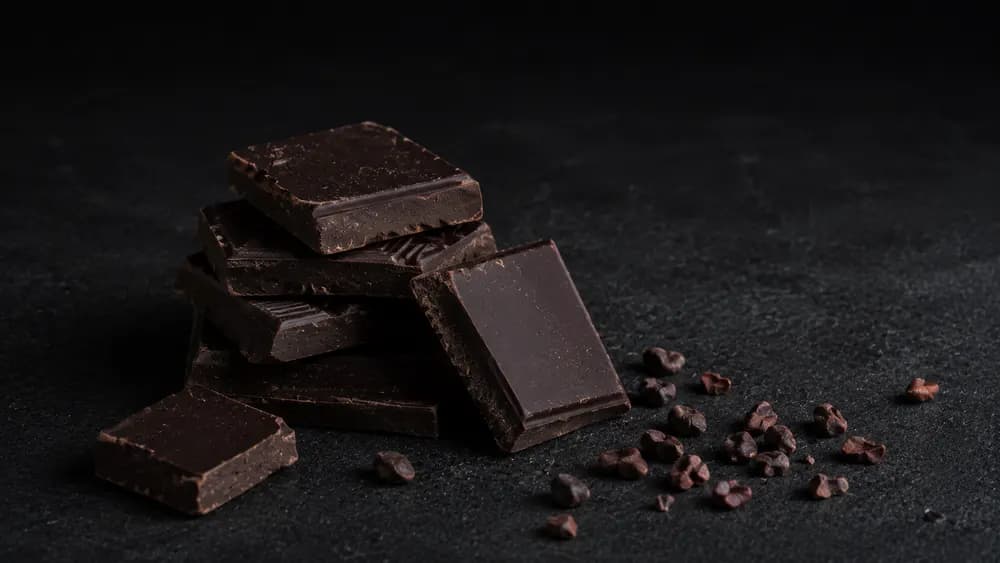
Cocoa is one of the most polyphenol-dense foods there is — its flavanols (especially epicatechin) are among the few 'indulgence' compounds with solid evidence: for vascular function, blood pressure, cognition and insulin sensitivity. What matters is the flavanol-versus-sugar math: at 85 %+ cocoa it tips clearly positive.
Nutrition
Macros
Minerals
Dr. Gundry
Gundry explicitly recommends dark chocolate from 72 %, ideally 90 %+, and as unsweetened as possible. For him cocoa is above all a carrier for polyphenols — specifically the flavanols epicatechin and catechin. He justifies their benefit through three routes: first, the flavanols promote nitric oxide (NO) production in the vascular endothelium, which widens vessels, improves blood flow and lowers blood pressure. Second, they act as a prebiotic — gut bacteria ferment them into anti-inflammatory short-chain fatty acids, which Gundry stresses as a central mechanism for gut health. Third, he frames cocoa polyphenols as supporting mitochondrial function and as an antioxidant. His caveats follow straight from the active compound: heavily alkalised (Dutch-processed) cocoa loses most of its flavanols, and milk can blunt their absorption — hence high cocoa content, barely any sugar, no milk chocolate.
Dr. William Li · 5×5 system
Cocoa is one of Li's showcase examples — he devotes several systems to dark chocolate in Eat to Beat Disease. Angiogenesis: the flavanols modulate vessel growth in both directions and improve perfusion. Regeneration: Li points to studies in which cocoa flavanols raised the number of circulating endothelial progenitor cells (a kind of vascular repair cell) — for him a direct stem-cell effect. Microbiome: the majority of the flavanols reach the colon largely undigested and act there as a prebiotic that fosters bifidobacteria and lactobacilli and drives short-chain fatty acid production. Cocoa also supplies fiber (11 g/100 g). DNA protection comes via the antioxidant capacity of the polyphenols; for immunity the direct data are thinner.
Biolazar evidence
The evidence extends well beyond blood pressure. Cardiovascular: the Cochrane meta-analysis shows a small but consistent blood-pressure reduction (~1.8 mmHg systolic), driven by measurably better endothelial function (flow-mediated dilation) via the NO pathway. The large COSMOS trial narrowly missed its primary endpoint but, in secondary analyses, found lower cardiovascular mortality — a remarkable signal for a dietary flavonoid. Cognition: several RCTs (Mastroiacovo, Brickman) show better perfusion and memory performance; the COSMOS-Web substudy found the cognitive benefit mainly in people with initially poor diet quality. Metabolism: flavanols improve insulin sensitivity in several studies. On top of that, cocoa at ~228 mg magnesium/100 g is one of the densest magnesium sources (a 20 g portion covers a good 10 % of the daily requirement) and supplies iron, copper and fiber. Two honest caveats: first the sugar — the benefit belongs to the flavanols, not the bar; 10–20 g of an 85 %+ type delivers the effect, a whole bar mostly delivers calories. Second, heavy metals: depending on origin, cocoa can contain notable cadmium and lead; choose brands tested for low levels and rotate varieties.
How to use
10–20 g daily, at least 85 % cocoa — the higher the content, the more flavanols and less sugar. Prefer minimally processed, non-heavily-alkalised types (Dutch-processing destroys much of the flavanols). Don't pair with milk, which can blunt flavanol absorption. As a longevity lever, what counts is the regular small portion, not the occasional whole bar. Choose heavy-metal-tested brands and rotate origins to keep the cadmium/lead load low.
Sources
- Ried et al. (Cochrane 2017): Kakao und Blutdruck — Meta-Analyse (~1,8 mmHg systolisch)
- Sesso et al. (COSMOS-Trial, Am J Clin Nutr 2022): Kakao-Flavanole und kardiovaskuläre Ereignisse (n=21.442)
- Mastroiacovo et al. (Am J Clin Nutr 2015): Kakao-Flavanole und Kognition bei älteren Erwachsenen
- Baker et al. (COSMOS-Web, 2023): Kakao-Flavanole und kognitive Funktion — Ernährungsqualität als Modifikator
- Cocoa flavanols, endothelial function and insulin sensitivity — PubMed-Suche
