Strawberries
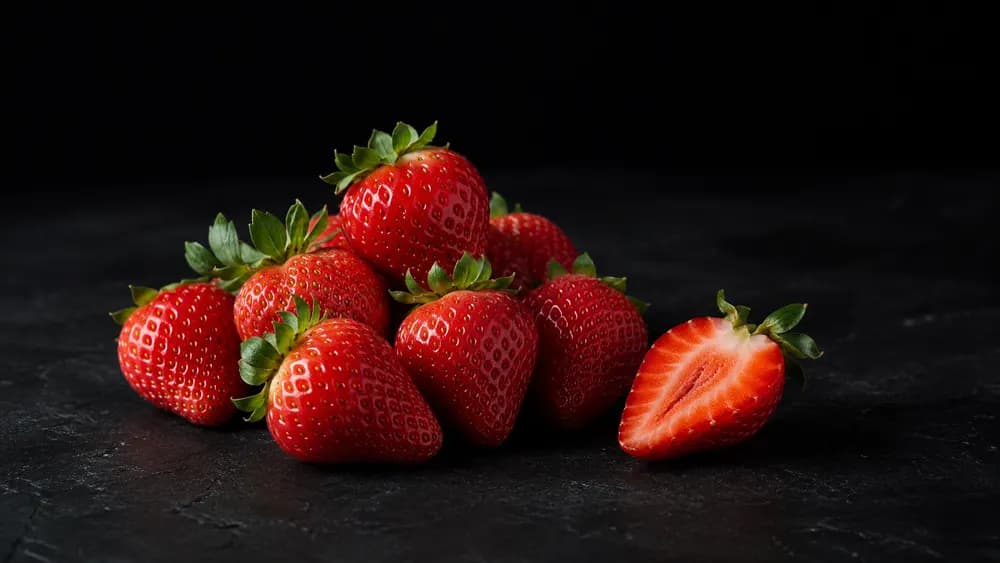
A low-sugar berry with exceptional vitamin C and the best known dietary source of the senolytic fisetin. Explicitly recommended by Gundry and linked in cohorts to better heart and brain health.
Nutrition
Macros
Vitamins
Minerals
Dr. Gundry
Strawberries are on Gundry's yes-list. Berries are among the few fruits he recommends without reservation: low sugar, high polyphenol density and a favorable fiber-to-sugar ratio. His usual caveat applies here too — ideally seasonal and organic, since conventional strawberries are among the most pesticide-laden fruits.
Dr. William Li · 5×5 system
Li cites strawberries for their high ellagic acid and vitamin C, which buffer oxidative DNA damage. Anthocyanins and fisetin add to cellular protection. The fiber content supports the microbiome without heavily loading blood sugar.
Biolazar evidence
Large cohorts (Nurses' Health, Health Professionals) link regular berry intake to lower cardiovascular risk and slower cognitive decline — strawberries among the best studied. The fisetin content is mechanistically intriguing (senolysis), but the related longevity evidence so far comes from animal models, not dietary doses in humans. For everyday effect, the whole package matters most: plenty of vitamin C, little sugar.
How to use
A handful (150 g) already delivers more vitamin C than an orange at only ~7 g sugar. Eat fresh and unsweetened; frozen strawberries keep most of the polyphenols. Prefer organic, as conventional strawberries carry a high pesticide load. Good with yogurt or nuts for a flatter blood-sugar curve.
