Raspberries
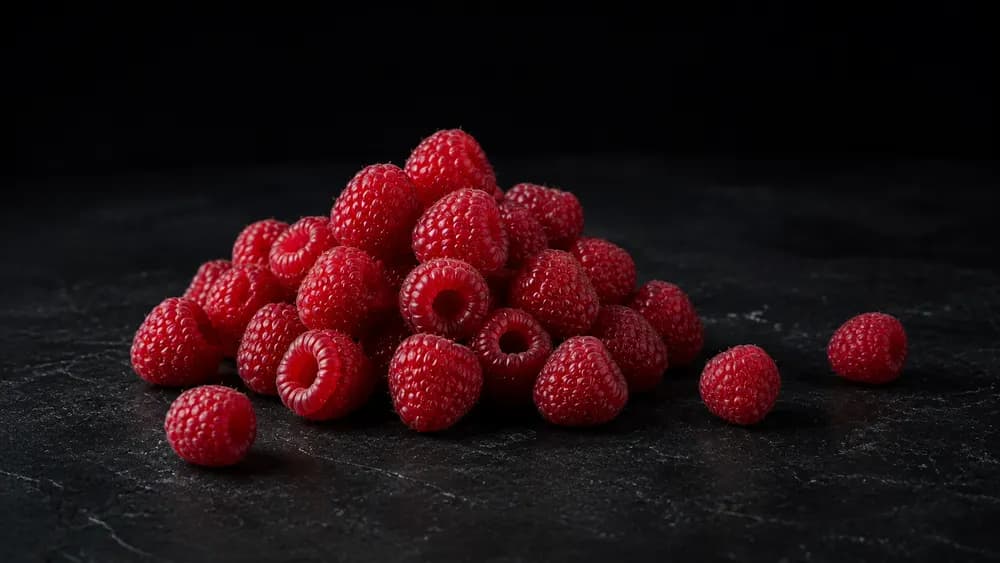
One of the highest-fiber, lowest-sugar berries of all — rich in ellagic acid and ellagitannins, from which the gut produces the longevity-relevant urolithin. Firmly on Gundry's yes-list.
Nutrition
Macros
Vitamins
Minerals
Dr. Gundry
Raspberries are among Gundry's preferred fruits. Of all common berries they have one of the best fiber-to-sugar ratios — a criterion he weights heavily. Polyphenols and a low glycemic load fit squarely in his yes-grid; he gives no special caveat.
Dr. William Li · 5×5 system
For Li, raspberries score twice over: their high fiber (more than most berries) feeds the microbiome, and the ellagitannins supply the substrate for urolithin A, which supports mitophagy and muscle function in studies. Ellagic acid contributes to DNA protection.
Biolazar evidence
The general berry/anthocyanin evidence applies to raspberries too; specific RCTs are rarer and mostly small. Especially interesting is the urolithin A axis: ellagitannins from raspberries (and walnuts, pomegranate) are converted in the gut to urolithin A, which improved mitochondrial markers in a human study — though not everyone produces urolithin equally well. For everyday purposes the high fiber density at very low sugar matters most.
How to use
Fresh or frozen (nutritional value is largely retained). Around 6.5 g fiber per 100 g makes them an ideal topping for yogurt, skyr or porridge. Their ellagitannins work best alongside a healthy microbiome that converts them to urolithin — regular fiber intake supports this conversion.
