Millet
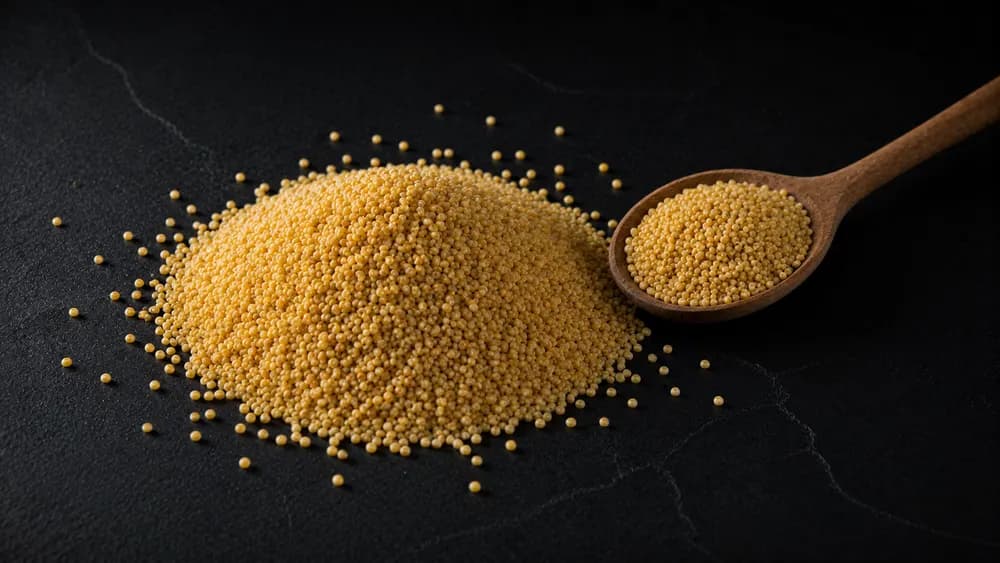
The grain that flips the battle lines: one of the very few Gundry explicitly permits (alongside sorghum) — gluten-free and low in lectins. The honest catch here is on our side: millet has a comparatively high glycemic index.
Nutrition
Macros
Vitamins
Minerals
Dr. Gundry
Millet is the big exception in Gundry's grain rejection: together with sorghum it's on his permitted list. His reasoning: it's gluten-free and contains far less of the lectins he otherwise criticizes in grains. For Gundry followers, millet is therefore the obvious grain substitute — he explicitly recommends it as a base for sides and porridge in place of wheat or rice.
Dr. William Li · 5×5 system
Li rates millet as a solid but not standout whole-grain source: fiber and resistant starch for the microbiome, plus polyphenols (especially in darker varieties like brown-top millet) with antioxidant DNA protection. Its high magnesium and iron content supports enzyme function and oxygen transport. No leader across all five systems, but a reliable, gluten-free building block.
Biolazar evidence
Millet is gluten-free, mineral-rich (magnesium, iron) and traditionally well tolerated — a sensible rice and wheat substitute. On glycemic index, honesty is needed: measured alone, millet runs fairly high (~70), even though meta-analyses show more favorable effects on fasting glucose in the context of whole meals. Combining it with fat, protein and vegetables blunts the rise. So the Gundry clearance and a low GI precisely do not coincide here — a good example that lectin status and blood-sugar effect are two separate questions.
How to use
Golden millet as a side (1 part to 2.5 parts water, ~20 minutes), as porridge or in patties. Rinse before cooking to remove bitter compounds; a brief dry-toast improves the aroma. Because of the higher glycemic index, best combined with fat, protein and vegetables rather than eaten plain. Brown-top millet has more polyphenols and is often used finely ground.
