Quinoa
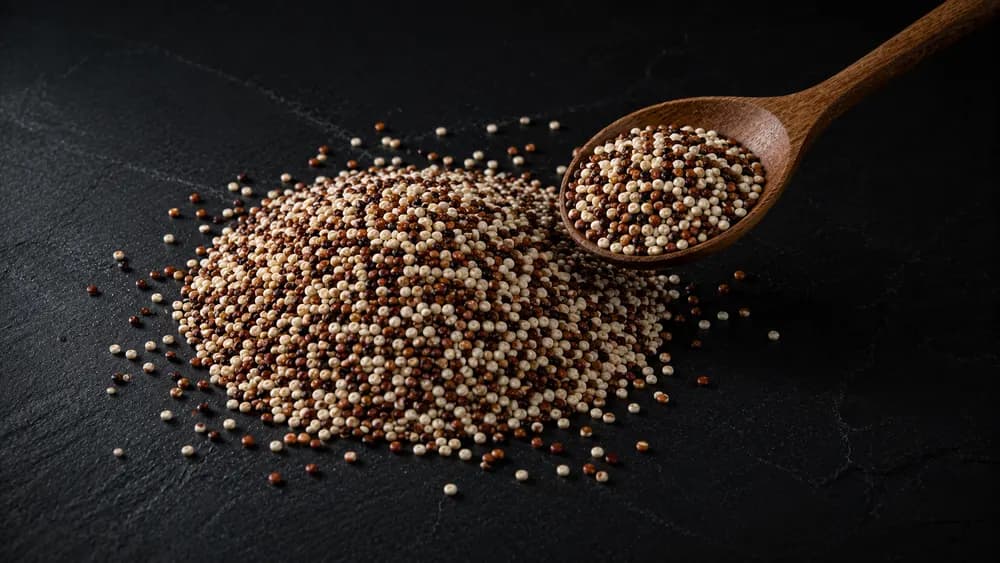
Botanically not a grain but a pseudo-cereal — and one of the few plant sources with a complete amino-acid profile. Gluten-free. Gundry allows it only with conditions: rinse thoroughly and pressure-cook.
Nutrition
Macros
Vitamins
Minerals
Dr. Gundry
As a pseudo-cereal, quinoa sits on Gundry's critical side in principle — he cites lectins and saponins in the seed coat. Unlike wheat, though, he doesn't give it a hard no: rinse thoroughly (removes saponins) and pressure-cook (breaks down lectins), and it may be eaten in moderation. So for him quinoa is a conditionally permitted food, not a ban.
Dr. William Li · 5×5 system
Li frames quinoa as a nutrient-dense pseudo-cereal: its complete protein (all nine essential amino acids, including lysine) supports tissue maintenance and regeneration. Fiber and saponins act on the microbiome; flavonoids like quercetin and kaempferol contribute antioxidant DNA protection.
Biolazar evidence
Quinoa's strength is its complete protein and high micronutrient density (magnesium, iron, folate) at a low glycemic index (~53) — attractive for gluten-free and plant-forward diets. Hard long-term endpoints are largely missing; the evidence rests on smaller RCTs on lipids and blood sugar plus the strong nutrient profile. Gundry's saponin/lectin concern is essentially neutralized by rinsing and cooking.
How to use
Rinse thoroughly in a sieve before cooking — this removes the bitter saponins of the seed coat. Ratio roughly 1 part quinoa to 2 parts water, simmer 15 minutes. As a gluten-free side, in salads, or as a breakfast porridge. Gundry followers additionally pressure-cook it.
