Sea Buckthorn
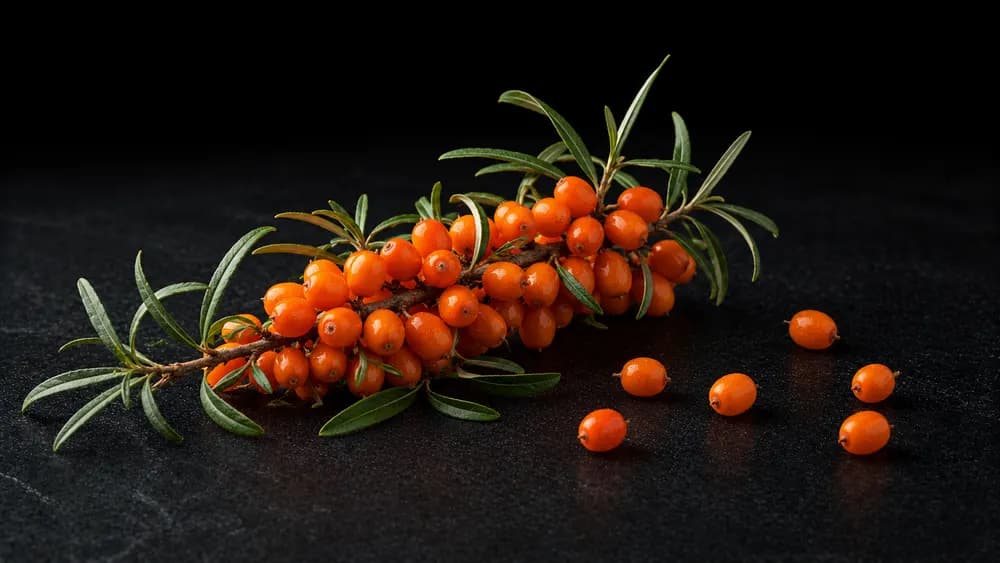
One of nature's densest vitamin C sources — several times an orange depending on variety — and one of the few fruits with the rare omega-7 fat (palmitoleic acid) for skin and mucous membranes. A nutrient bomb with a distinctive profile, but (still) thin human evidence.
Nutrition
Macros
Vitamins
Minerals
Dr. Gundry
Sea buckthorn meets Gundry's criteria on several fronts: very low sugar, extremely polyphenol- and vitamin-rich and — unusual for a berry — with a notable share of healthy fats, mostly palmitoleic acid (omega-7). This combination of antioxidants and fat matches exactly the profile he values in foods. As with other very tart berries, his practical caveat applies: the whole fruit, the pure pulp or the cold-pressed oil count, not the heavily sweetened sea-buckthorn juice or liqueur.
Dr. William Li · 5×5 system
Sea buckthorn scores broadly for Li. DNA protection and immunity: the exceptional content of vitamin C, vitamin E and carotenoids delivers one of the strongest antioxidant and immune-supporting capacities among fruits. Regeneration: the rare omega-7 (palmitoleic acid) is a building block of skin and mucous-membrane cells and is studied for tissue repair, skin barrier and moist mucosa. Angiogenesis and microbiome benefit from the polyphenols and fiber. In sum, an unusually complete micronutrient and fatty-acid profile for a single fruit.
Biolazar evidence
The solid core is the exceptional nutrient density: sea buckthorn is one of nature's richest vitamin C sources (variety-dependent ~200–600 mg/100 g), plus abundant vitamin E, carotenoids and, in palmitoleic acid, a rare omega-7 fat scarcely found in plants. The human evidence is still thin but promising: smaller RCTs show effects on dry eyes (Larmo) and signals for skin-barrier and atopic-skin benefit; some studies suggest favourable effects on blood lipids. Framing: no proven miracle, but a genuinely distinctive profile — the combination of vitamin C density and omega-7 is found in almost no other fruit. Because of its very tart, astringent taste it is almost always processed; watch for added sugar in juices and purée.
How to use
Because of its very tart taste, rarely eaten plain; useful as pure, unsweetened purée (small amounts), in a smoothie with sweeter fruit, or as cold-pressed pulp oil for the omega-7. Vitamin C is heat-sensitive — process gently. Watch for added sugar in sea-buckthorn juices and nectars; the unsweetened pulp or oil delivers the benefit without the sugar load.
