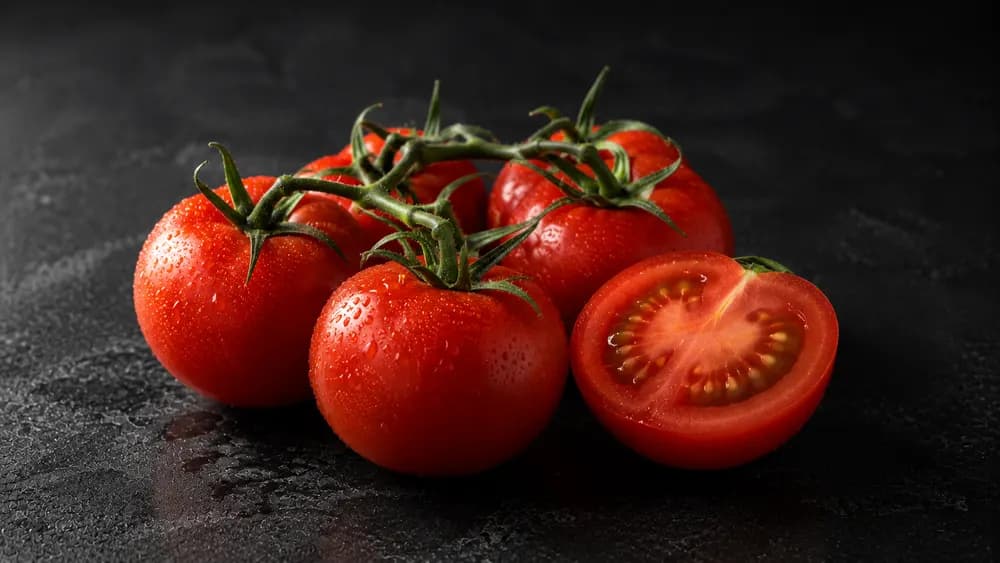
Tomato
Classic nightshade — a Mediterranean health staple, treated as problematic by the lectin-critical camp. The lycopene literature is solid; Gundry's rejection is weakly supported.
Nutrition
Macros
Vitamins
Minerals
Dr. Gundry
Gundry places tomato on his no-list because it's a nightshade and contains lectins (mainly in skin and seeds). He argues these lectins may weaken the gut barrier and trigger autoimmune processes. Note: peeled and de-seeded tomatoes are permitted in his stricter framing.
Dr. William Li · 5×5 system
Tomatoes are a showcase for angiogenesis in Li's framework: their red carotenoid lycopene is among the dietary compounds that can curb the pathological vessel growth of tumours — he cites it especially in the prostate context. Preparation is decisive: lycopene is fat-soluble and locked into the cell walls, so cooking plus a little olive oil makes it many times more bioavailable — cooked tomato sauce clearly beats the raw tomato. At the DNA level lycopene is strongly antioxidant, and the fiber contributes moderately to the microbiome. Regeneration is the weakest of the five axes.
Biolazar evidence
The evidence for lycopene is solid across several longevity axes. Cardiovascular: meta-analyses link higher lycopene levels to lower stroke and coronary risk and better endothelial function. Cancer: for prostate cancer the Rowles meta-analysis shows a probable, dose-dependent protective effect. Skin: lycopene accumulates in the skin and, in studies, raises its intrinsic protection against UV-induced redness — no substitute for sunscreen, but a real added effect. Tomatoes are also very low-calorie (18 kcal/100 g) and potassium-rich. Honest framing on the Gundry dispute: the warning about nightshade lectins is mechanistically plausible but has essentially no RCT evidence for harm in healthy adults; the far larger health signal argues for the tomato, not against it. Anyone with an autoimmune condition can test individually (elimination and reintroduction) or peel and de-seed — where most of the lectins sit.
How to use
Cook (tomato sauce, braised tomatoes) for maximum lycopene. Serving with olive oil substantially boosts bioavailability. For Gundry followers: peel and de-seed. With autoimmune conditions, judge individually.
