Wild Salmon
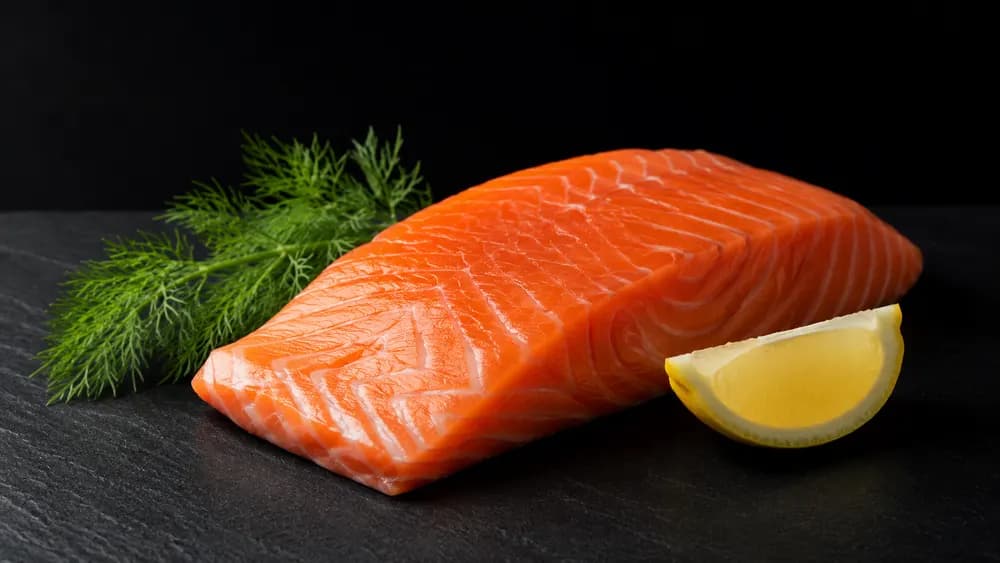
The most direct dietary source of EPA and DHA — the long-chain omega-3s with the strongest cardiovascular evidence. Wild-caught offers a better fatty-acid profile and fewer contaminants than farmed.
Nutrition
Macros
Vitamins
Minerals
Dr. Gundry
Gundry explicitly recommends wild-caught salmon as one of the best animal protein sources. His case rests on two active compounds: the long-chain omega-3s EPA and DHA, which he frames as inflammation-resolving and as building blocks of healthy cell membranes, and astaxanthin — the red carotenoid that gives wild salmon its color and acts as a potent antioxidant for membranes and mitochondria. Both are largely missing in farmed salmon: grain/soy feed shifts the fatty-acid profile toward omega-6, the astaxanthin is often merely added dye, and the contaminant load is higher. Hence he prefers smaller wild species such as Alaskan sockeye. Lectins are a non-issue here anyway.
Dr. William Li · 5×5 system
Li highlights omega-3-rich fish above all for regeneration: EPA and DHA are building blocks of every cell membrane, DHA especially for brain and retina, and the body converts them into resolvins and protectins — signalling molecules that actively switch off inflammation again. Beyond mere anti-inflammation this supports tissue repair. Angiogenesis and DNA protection additionally benefit from astaxanthin, one of the strongest membrane antioxidants. Li barely invokes the microbiome here since salmon has no fiber — its value lies in the fats, the protein and the micronutrients (vitamin D, B12, selenium).
Biolazar evidence
The evidence reaches beyond the heart. Cardiovascular: the link between marine omega-3 and lower coronary mortality is consistent across many cohorts (Del Gobbo, n≈45,000) — 1–2 servings of fatty fish per week is the most-replicated sweet spot. Brain: regular fish intake is associated in meta-analyses with slower cognitive decline and lower dementia risk — DHA is a core building block of grey matter. Inflammation/joints: via resolvins, EPA/DHA actively resolve inflammation, with benefit e.g. in rheumatoid arthritis. On top, wild salmon is one of the few good dietary sources of vitamin D (~15 µg/100 g) and supplies ample B12 and selenium. Two honest caveats: first, the effect is tied to marine EPA/DHA, not plant-based ALA (only a few percent is converted). Second, contaminants — smaller, short-lived species (sockeye, sardine) carry less mercury, and wild-caught usually has fewer contaminants and antibiotics than farmed.
How to use
1–2 servings (100–150 g each) per week. Prefer wild-caught (sockeye, Alaska) over farmed. Cook gently (avoid high-heat searing) to preserve the fragile omega-3s. Not eating fish? Algae oil provides EPA/DHA directly.
