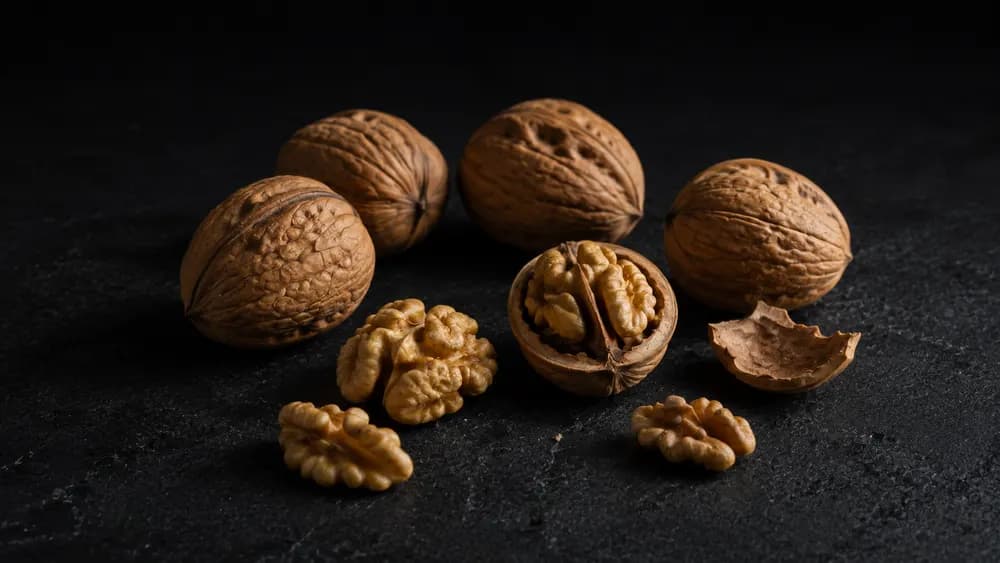
Walnuts
The nut with the highest content of plant-based omega-3 (ALA) and polyphenols. Part of the PREDIMED arm that lowered cardiovascular events — and one of the few snacks all three camps endorse.
Nutrition
Macros
Vitamins
Minerals
Dr. Gundry
Walnuts are among Gundry's explicitly recommended nuts and rank high for him. His case is twofold: first, they are the only tree nut with a meaningful share of plant-based omega-3 (alpha-linolenic acid, ALA) and a favourable fatty-acid ratio. Second, they supply plenty of polyphenols — chiefly ellagitannins, from which the gut microbiome forms urolithin A, which Gundry connects to cellular recycling (mitophagy) and gut health. Add fiber for the gut flora and virtually no problematic lectins. He regularly cites them as an ideal snack and fat source — raw rather than heavily roasted, since the fragile fats suffer otherwise.
Dr. William Li · 5×5 system
Li lists walnuts as a food acting across multiple systems. Regeneration: ALA and the good fatty-acid profile supply building blocks for cell membranes and vascular health. Microbiome: walnut ellagitannins are a key substrate for urolithin A; intervention studies show regular walnut intake measurably shifts the gut flora toward anti-inflammatory, butyrate-producing bacteria. Angiogenesis and DNA protection come via the polyphenols and vitamin E. Of all nuts, the walnut has the highest antioxidant capacity — for Li an argument to favour it over other nuts.
Biolazar evidence
The evidence spans several longevity axes. Mortality/heart: nuts show a dose-dependent reduction in all-cause mortality in large cohorts (Bao et al., n≈119,000), and PREDIMED provides RCT evidence — the nut arm lowered cardiovascular events. Blood lipids: walnuts consistently improve LDL and total cholesterol in meta-analyses. Brain: the 2-year WAHA trial in older adults found no overall effect on cognition but slower decline in the subgroup with poorer baseline diet — the same pattern seen with other polyphenol foods. Gut: intervention studies show a more favourable microbiome composition and more urolithin production. Two honest framings: walnuts are calorie-dense — a handful (about 30 g) is the studied serving, not the whole bag. And their omega-3 is plant-based ALA, which the body converts to EPA/DHA at only a few percent — so walnuts don't fully replace fatty fish.
How to use
A handful (about 30 g) daily as a snack or over salad/yogurt. Raw or lightly toasted. Store cool and dark — the abundant unsaturated fats oxidise otherwise (rancid taste = don't eat).
