Avocado
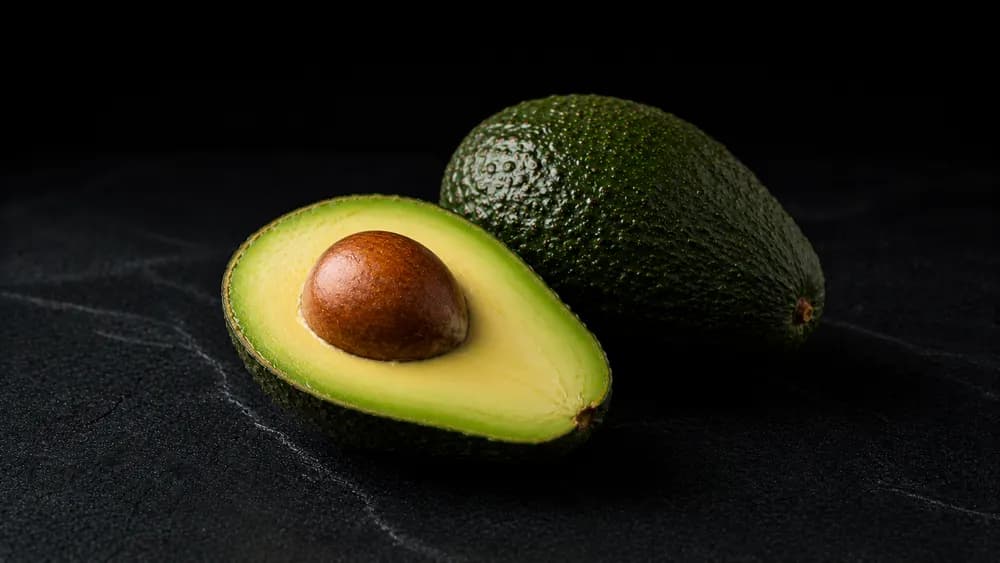
Botanically a fruit, nutritionally a fat: rich in monounsaturated oleic acid like olive oil, plus exceptionally high in fiber, very low in sugar and richer in potassium than a banana. One of the best-evidenced foods, endorsed across every camp.
Nutrition
Macros
Vitamins
Minerals
Dr. Gundry
The avocado is one of Gundry's absolute top foods — he recommends up to a whole one a day. His case covers almost his entire grid: the fat is mostly monounsaturated oleic acid, the same low-inflammation fatty acid as in olive oil. The fiber content is exceptionally high for a fat source (~7 g/100 g) and feeds the microbiome. Sugar and lectins are minimal, and the abundant potassium supports blood pressure and cell function. For him the avocado is also an ideal carrier to better absorb fat-soluble plant compounds from other vegetables.
Dr. William Li · 5×5 system
For Li, the avocado scores above all on the microbiome and as a nutrient amplifier. Microbiome: the high content of soluble and insoluble fiber (~7 g/100 g) fosters a diverse, short-chain-fatty-acid-producing gut flora — an avocado intervention study showed exactly that. Regeneration and DNA protection: the monounsaturated fats provide membrane building blocks, alongside vitamin E, lutein and glutathione as antioxidants. A characteristic effect: the avocado's fat measurably raises the uptake of fat-soluble carotenoids from other vegetables — it makes a salad more nutritionally effective.
Biolazar evidence
The evidence is unusually strong for a single food. Blood lipids: controlled studies (Wang 2015) show that one avocado a day lowers LDL and the especially atherogenic small, dense LDL — above all when it replaces saturated fat. Cardiovascular: in large Harvard cohorts (Pacheco 2022, n≈110,000) higher avocado intake was associated with lower cardiovascular disease risk, especially when butter or processed meat was replaced by avocado. Blood pressure: the high potassium (485 mg/100 g, more than a banana) supports healthy regulation. Satiety and nutrients: the fat-plus-fiber combination is filling, and the fat improves absorption of fat-soluble vitamins. Honest framing: the avocado is calorie-dense (~240 kcal per fruit) — its benefit unfolds when it replaces worse fats, not as an added calorie source on top (and guacamole-with-chips flips the math).
How to use
Half to a whole ripe avocado daily — ripe when it yields to gentle pressure. Enjoy raw (heat dislikes the fragile fat): over salad, on bread, in a smoothie for creaminess. Ideal as the fat source with vegetables, since it raises the uptake of fat-soluble plant compounds. Its benefit unfolds best when it replaces butter, cream cheese or cold cuts — not as an extra on an already fatty meal.
