Pomegranate
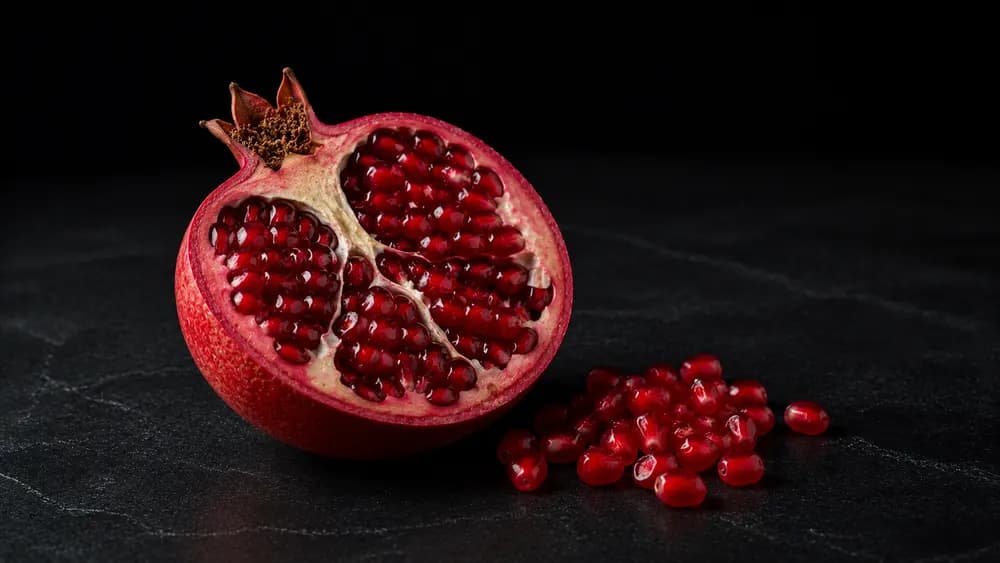
Botanically a berry and the strongest dietary source of ellagitannins, from which the gut produces urolithin A — currently the most-discussed mitophagy trigger in longevity research. Valued by Gundry and Li alike.
Nutrition
Macros
Vitamins
Minerals
Dr. Gundry
Pomegranate is among the fruits Gundry highlights positively — he explicitly names its polyphenols (punicalagins) as vessel- and aging-protective. Since the sugar content is higher than in classic berries, his moderation rule applies: eat the seeds (arils) in moderate portions rather than large amounts of sweetened pomegranate juice.
Dr. William Li · 5×5 system
Pomegranate is one of Li's favorites and he rates it broadly across the systems: its polyphenols modulate angiogenesis (including in the context of prostate health), the ellagitannins feed mitophagy via urolithin A (regeneration) and act prebiotically on the microbiome. Strong antioxidant DNA protection.
Biolazar evidence
Two solid levels: a meta-analysis shows a moderate blood-pressure-lowering effect of pomegranate juice; and pomegranate's ellagitannins are the precursor for urolithin A, which improved mitochondrial markers in a controlled human study. Important note: not every gut produces urolithin equally well (metabotype differences), and many marketing promises (curing cancer, broad anti-aging miracles) are overblown. The whole fruit beats the sweetened juice.
How to use
Eat the seeds (arils) fresh — they provide fiber that pure juice lacks. Half to one whole fruit is a good portion; large amounts of juice bring a lot of sugar. To benefit from the urolithin A axis you need regular ellagitannin sources (pomegranate, raspberries, walnuts) and a microbiome that converts them.
