Barley Grass
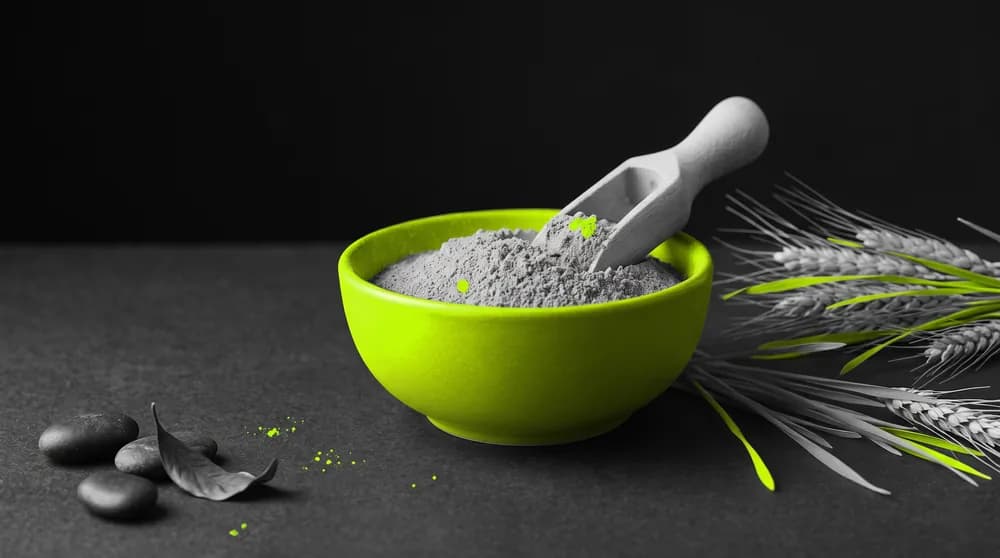
The young leaf of barley (harvested before grain formation) — a nutrient-dense green powder with minerals, provitamin A, flavonoids (saponarin) and fiber. Plausibly antioxidant and gut-friendly, but human evidence is thin. Note: the strong beta-glucan/cholesterol effect belongs to barley *grain*, not the grass.
How it works
Barley grass is the young leaf of barley, harvested before the grain (and thus gluten) forms. At this stage nutrient density is high: minerals, provitamin A, B vitamins, the flavonoid saponarin and chlorophyll. Its plausible effects rest mainly on antioxidants (radical scavenging, protecting blood lipids from oxidation) and on fiber that feeds the microbiome. Unlike the mature grain, the grass contains little phytic acid, so its minerals are well bioavailable.
Dosage
Typically 3–10 g of powder per day (or fresh juice), in water/smoothie. Ramp up slowly when coming from a low-fiber diet to avoid bloating. Choose certified gluten-free products (cross-contamination with mature grain).
Considerations
Honest framing: barley grass is a genuine nutrient concentrate (minerals like magnesium, potassium, iron; provitamin A; flavonoids like saponarin; fiber), and germination largely breaks down antinutrients like phytic acid — so the minerals are well available. BUT: the human studies are small, older and often used concentrated extracts (e.g. 15 g of barley-leaf extract lowered LDL oxidation in diabetics). The powerful cholesterol and blood-sugar effect of beta-glucan comes from barley *grain* (EFSA health claim from 3 g/day), not the grass. Vitamin C is low in the dried powder (fresh juice has more). Safety: as a leafy green, barley grass is rich in vitamin K — anyone on blood thinners (e.g. warfarin) should clear it with their doctor. Coeliac/gluten sensitivity: only certified gluten-free products. Bottom line: a good, inexpensive green powder to complement the diet — not a proven remedy.