Barley Grass: Nutrients, Benefits & the Honest Fact-Check
How healthy is barley grass really? Nutrient profile with table, what saponarin, fiber & minerals can do — and why the strong beta-glucan effect belongs to the grain, not the grass.

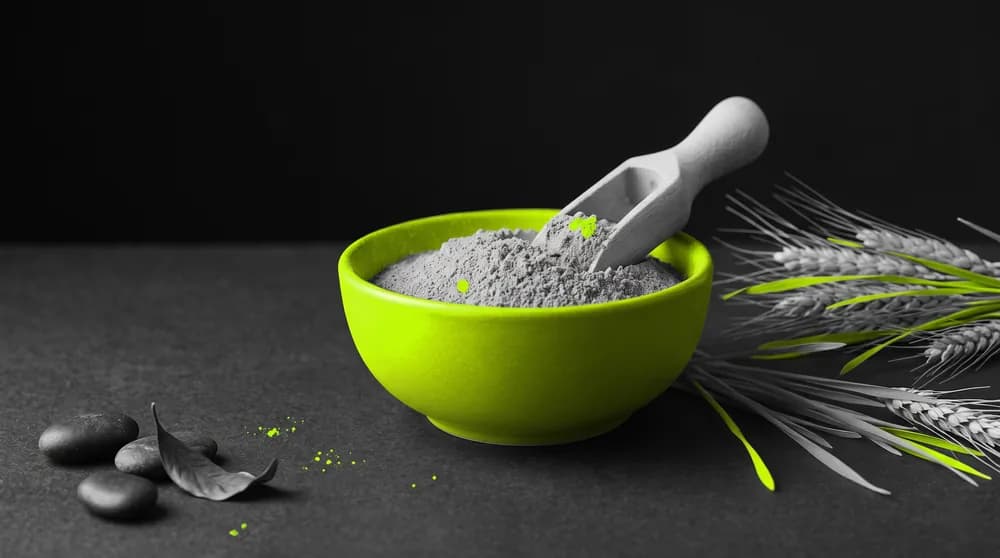
Barley grass — the young green leaf of barley (Hordeum vulgare) — has moved from niche product to a fixture in many health routines. Behind the lifestyle image there really is a dense nutrient profile. But like any "superfood," it deserves a sober look: what's proven, what's marketing — and what to watch for with gluten and tolerance?
One thing up front that almost every article confuses: barley grass is not barley grain. The spectacular cholesterol and blood-sugar effects of beta-glucan come from the grain — the grass has a different (own) profile.
Claim vs. evidence at a glance
| Claim | What the evidence shows | Verdict |
|---|---|---|
| Very nutrient-dense (minerals, provitamin A, flavonoids) | True — young leaf, low phytate content | 🟢 supported |
| Antioxidant, protects blood lipids from oxidation | Small human study (barley-leaf extract) + mechanism | 🟡 preliminary |
| Prebiotic, good for the microbiome & gut complaints | Plausible; colitis data mainly on germinated grain (GBF) | 🟡 preliminary |
| Lowers cholesterol/blood sugar via beta-glucan | Beta-glucan sits in the grain, not the grass | 🟠 conflated |
| Loads of vitamin C, "detox" via chlorophyll, active enzymes | Vit. C low in powder; enzymes digested; "detox" is marketing | 🔴 overstated |
| Naturally gluten-free | Correct — but mind cross-contamination | 🟢 correct (with caveat) |
What barley grass is
Unlike the mature grain (mostly starch), barley grass is harvested at an early growth stage — before the seed, and thus gluten, forms. In this phase the plant mobilizes its reserves for leaf growth, and nutrient density is high. It's usually sold as powder or fresh juice.
The nutrient profile (with table)
Barley grass is rich in minerals and plant compounds. Important context: the values below are per 100 g of powder — but a typical daily serving is only 3–10 g (roughly one tenth to one thirtieth of these). The values also vary considerably by variety, cultivation and batch.
| Nutrient | ~ per 100 g powder | Note |
|---|---|---|
| Potassium | ~3,300 mg | Electrolyte |
| Phosphorus | ~760 mg | |
| Calcium | ~535 mg | |
| Magnesium | ~480 mg | densely present |
| Iron | ~22 mg | plant (non-heme) |
| Zinc | ~3.3 mg | |
| Provitamin A (β-carotene) | high (~19,000 IU) | precursor of vitamin A |
| Vitamin B2 (riboflavin) | ~2.4 mg | |
| Vitamin B1 (thiamine) | ~0.65 mg | |
| Vitamin E | ~1.1 mg | |
| Vitamin K | high (leafy green) | ⚠️ interacts with blood thinners |
| Vitamin C | low in powder | drying destroys it — fresh juice has more |
| Protein | ~27 g | |
| Fiber | ~8–18 g | depending on product |
| Bioactives | saponarin, GABA, SOD, chlorophyll | characteristic of the leaf |
The minerals are well bioavailable because the young grass — unlike the grain — contains little phytic acid (more below).
What actually works (preliminary, but plausible)
Antioxidants & saponarin
The leaf contains the characteristic flavonoid saponarin plus provitamin A, vitamin E and the enzyme SOD — together a decent antioxidant package. A small, older human study showed that 15 g of barley-leaf extract lowered the oxidation of LDL cholesterol in diabetics (a risk factor for atherosclerosis). That's an interesting signal — but small, old, and achieved with a concentrated extract, not a spoonful of powder.
Fiber & microbiome
Barley grass provides soluble and insoluble fiber that can act as prebiotics, feeding beneficial gut bacteria (bifido-/lactobacilli). The most robust gut data, however, concern germinated barley grain (germinated barley foodstuff) in ulcerative colitis — not the green powder. To target the microbiome specifically, dedicated probiotics and prebiotic fibers like inulin are more reliable.
Minerals without the phytate brake
Mature grains are rich in phytic acid, which binds minerals like zinc, iron and magnesium and blocks their uptake. Germination and growth into the young grass largely break down this phytic acid enzymatically — so the grass's minerals are far better available.
Grain vs. grass: the decisive fact-check
This is the most common error in barley-grass articles. The scientific review by Zeng et al. 2020 separates them cleanly:
- Barley grain: beta-glucan, polyphenols, arabinoxylan, phytosterols, tocols, resistant starch → here sits the strong, EFSA-recognized cholesterol-lowering beta-glucan effect (from 3 g/day).
- Barley grass: GABA, flavonoids (saponarin), SOD, potassium/calcium, vitamins, tryptophan → more antioxidant and nutrient-supplying.
So reaching for grass powder because "beta-glucan lowers cholesterol" confuses the plant parts. For the proven cholesterol effect, barley or oat flakes (the grain) would be the right lever.
Gluten, antinutrients & tolerance
Gluten-free — with an asterisk: gluten only forms in the maturing grain. Since the grass is harvested earlier, it's naturally gluten-free. But: in cultivation and processing, stray grains can be co-harvested or machines may also process mature grain. With coeliac disease or strong gluten sensitivity, choose certified gluten-free products.
Oxalates and lectins in the young leaf are negligible compared with raw spinach or chard.
Caveat — vitamin K & blood thinners: As a leafy green, barley grass is rich in vitamin K. Anyone on anticoagulants like warfarin should coordinate regular intake with their doctor, since vitamin K affects their action.
Initial side effects: Switching from a low-fiber diet (e.g. keto/carnivore) to high doses of green powder can initially cause bloating or looser stool — not toxicity, but the microbiome adjusting. Ramp up slowly.
What's overstated
- "Enzymes" (proteases/amylases): largely denatured in the stomach — a systemic "enzyme benefit" from the powder isn't established.
- Chlorophyll "detox": the structural resemblance to hemoglobin is neat, but a "detoxification" effect is marketing, not evidence.
- Vitamin C: low in the dried powder — the high figures apply more to fresh juice.
Practice
- Dose: typically 3–10 g powder/day in water or a smoothie; ramp up slowly.
- Quality: certified gluten-free, low in contaminants; details on the barley grass compound page.
- Expectation: useful as a nutrient-rich supplement — not a replacement for a fiber-rich, plant-forward diet.
Bottom line
Barley grass is far more than a green garnish juice: an inexpensive, mineral- and flavonoid-rich green powder with plausibly antioxidant and gut-friendly properties — and, thanks to germination, without the phytate brake of the mature grain. But honestly: the human evidence is thin and often from extracts, and the powerful beta-glucan/cholesterol effect belongs to the grain, not the grass. Choose certified, cross-contamination-free quality, clear it with your doctor if you're on blood thinners — then barley grass is a sensible, nutrient-dense supplement.
- [1]Zeng et al. (2020): Molecular Mechanism of Functional Ingredients in Barley to Combat Human Chronic Diseases — Oxidative Medicine and Cellular Longevity (PMC7149453)
- [2]Zeng et al. (2018): Preventive and Therapeutic Role of Functional Ingredients of Barley Grass for Chronic Diseases — review (PMC5904770)
- [3]EFSA (2011): Barley beta-glucans & lowering of blood cholesterol — health claim (applies to the barley grain, from 3 g/day)
- [4]PubMed search: Barley leaf extract & LDL oxidation in diabetics
- [5]Kanauchi et al.: Germinated barley foodstuff in ulcerative colitis — pilot study (PMID 12572869)
- [6]Celiac Disease Foundation: barley grass is naturally gluten-free — certification matters due to cross-contamination
- [7]PubMed search: Germination & reduction of phytic acid (mineral bioavailability)