Aging as a Curable Disease: Can We Reverse the Biological Clock?
David Sinclair's information theory of aging, sirtuins, NAD+ and Yamanaka factors — how research is trying to reverse biological age, and what holds up.

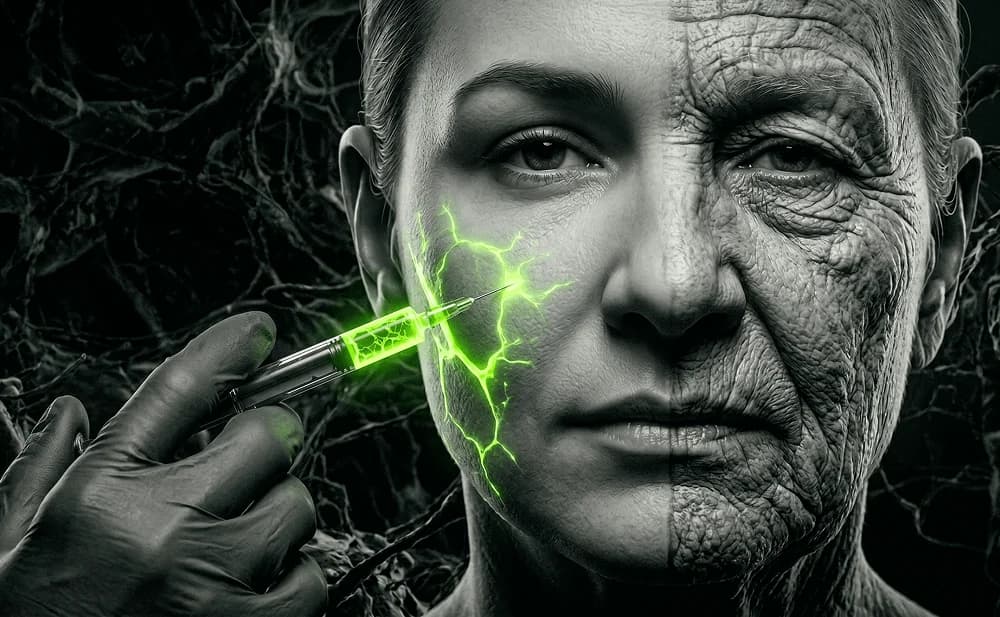
For millennia, humanity has accepted aging as inevitable fate. We view physical and mental decline after a certain age as a natural process. But in the laboratories of leading research institutions, a paradigm shift is underway. Top geneticists — above all Harvard professor Dr. David Sinclair — propose a provocative thesis: aging is not an inevitable force of nature, but a disease — and as such, it can be treated, perhaps even cured.
Based on decades of research, a picture is emerging that frames the human body not as a wearing-down machine, but as a biological computer whose "software" becomes corrupted with age — and can be restarted through targeted intervention.
The Information Theory of Aging: A Cellular Identity Crisis
To understand how age reversal could work, we first have to clarify why we age at all. Traditionally, the wear-and-tear theory has dominated — the body simply wears out. Modern epigenetics offers a different angle: the information theory of aging.
Our DNA, the universal blueprint of the body, is essentially identical in every one of our cells. The fact that a skin cell looks and behaves like a skin cell, while a nerve cell behaves like a nerve cell, is not determined by the DNA itself but by the epigenome (Greek epi = above). The epigenome is a complex control system of chemical markings — particularly DNA methylation — that, like a conductor, decides which genes are switched "on" or "off."
With increasing age, through cell divisions and environmental influences (UV radiation, smoking, toxins), faulty repairs of DNA damage occur. Epigenetic markings are lost or displaced. The result is a cellular identity crisis: cells gradually forget their actual function. Skin cells lose their elasticity, nerve cells their conductivity.
The Vinyl Record Analogy
Imagine DNA as the music on a vinyl record, and the epigenome as the stylus. If the record gets scratched (cell stress, DNA damage), the music (genetic information) is still there — but the needle skips. The sound becomes distorted. Aging, therefore, is not the loss of genetic information, but the cell's inability to read it correctly.
The Guardians of DNA: Sirtuins and Their Fuel NAD+
A central role in maintaining this epigenetic balance is played by certain proteins called sirtuins. They act as epigenetic guardians with two main tasks:
- They control cellular identity (by regulating genes).
- They repair acute DNA damage (e.g. chromosome breaks).
When massive DNA damage occurs, sirtuins leave their post as gene regulators and rush to the repair site. When they're finished, however, not all sirtuins return to their exact original location. Over decades, this molecular "ping-pong" causes the epigenome to blur.
To function, sirtuins need a fuel: NAD+ (nicotinamide adenine dinucleotide). This essential coenzyme is abundant in our youth — but by age 50, NAD+ levels in the human body roughly halve. Sirtuins lose their working basis, DNA repair slows, and the aging process accelerates.
Rejuvenation in the Lab: A Reset Button for Aging
That this theory is more than a thought experiment has been demonstrated impressively over the past few years. In a landmark experiment (published 2023 in Cell), Sinclair's team managed to make mice age twice as fast through deliberately induced DNA breaks ("ICE mice") — without triggering any mutations. The mere stress on the epigenome was enough to cause gray hair, frailty, and age-related diseases.
But the far bigger sensation is the reversal of this process. Scientists have discovered a kind of "backup copy" of youthful epigenetic information inside cells. Using a viral gene therapy that delivers three of the four so-called Yamanaka factors (genes that can revert cells into stem cells) into old tissue, the age of cells could literally be turned back.
Early successes include the complete restoration of vision in old mice and primates, including those suffering from glaucoma, by rejuvenating the optic nerve. The first clinical trials in humans for treating age-related blindness are imminent. If they succeed, it would be the first proof that targeted biological age reversal in humans is possible.
Hormesis: How Targeted Stress Keeps Us Young
While gene therapies for age reversal are still future music for daily life, epigenetics can already be influenced today. The magic word is hormesis — the principle that mild, well-dosed biological stressors make the body more resilient and activate repair mechanisms. In a modern world defined by abundance, these mechanisms rust.
Intermittent Fasting
The constant intake of meals, especially heavily processed foods, keeps the body in growth mode. Forgoing food (e.g. by skipping breakfast and adopting fasting windows of 14–16 hours) signals food scarcity. This raises NAD+ levels, activates sirtuins, and after about 48–72 hours triggers autophagy — a cellular recycling program in which old, dysfunctional proteins are broken down.
Physical Stress
Aerobic exercise — the kind that gets you noticeably out of breath — forces cells to adapt to temporary oxygen shortage (hypoxia) and energy demand. Association studies show that regular endurance training significantly protects telomeres (the protective caps of our chromosomes) from age-related shortening.
Heat and Cold Exposure
Regular sauna sessions activate so-called heat shock proteins (HSPs), which repair misfolded proteins. Cold water exposure stimulates the cardiovascular system and promotes the formation of healthy brown adipose tissue.
Nutrition and Molecular Helpers
Beyond when we eat, what we eat matters. The science of xenohormesis suggests that by consuming stressed plants (e.g. those exposed to strong UV radiation or drought), we can absorb their molecular stress responses ourselves.
| Compound class | Source | Effect |
|---|---|---|
| Polyphenols | Blueberries, extra-virgin olive oil, matcha | "Gas pedal" for sirtuins |
| Spermidine | Wheat germ, aged cheese | Promotes autophagy |
| NMN | Supplement | Direct NAD+ precursor |
| Plant-forward diet | General | Lowers mTOR signaling, reduces civilization risks |
A Medical Aside: Lipoprotein(a)
Dr. Sinclair emphasizes the importance of predictive diagnostics long before chronic disease breaks out. One example is Lipoprotein(a) — a genetically determined, massive risk factor for atherosclerosis and heart attacks, often overlooked in standard bloodwork. Aggressive LDL cholesterol lowering through statins or Lp(a)-specific therapies (e.g. high-dose vitamin B3/niacin, though clinically debated due to the "flush" effect) is part of modern, proactive longevity medicine.
Conclusion: A Hopeful but Critical View
The vision of fighting Alzheimer's, cancer, and cardiovascular disease not in isolation but by healing their shared root — aging — is fascinating. The findings from foundational research in mice and primates are undoubtedly groundbreaking.
That said, caution is warranted: animal models do not always translate 1:1 to the complex human organism. While the safety and efficacy of NMN or resveratrol in humans remain the subject of heated scientific debate across the breadth of clinical research, one thing is certain: lifestyle factors massively shape the epigenome.
Until the age-reversal pill reaches market readiness, what remains is the evolution-tested recipe: moderation in eating, plenty of movement, plant-forward food, and an active relationship with the challenges our body needs.
- [1]Yang et al. (2023): Loss of epigenetic information as a cause of mammalian aging — Cell
- [2]Lu et al. (2020): Reprogramming to recover youthful epigenetic information and restore vision — Nature
- [3]Laukkanen et al. (2015): Sauna Bathing and Fatal Cardiovascular and All-Cause Mortality — JAMA Internal Medicine
- [4]PubMed search: Yamanaka factors & partial reprogramming
- [5]PubMed search: NAD+ decline & aging
- [6]ESC Guidelines: Dyslipidaemia & Lipoprotein(a)
- [7]David Sinclair interviewed by Steven Bartlett — The Diary of a CEO