Cancer, the Immune System and Longevity: How We Heal Ourselves Daily
We form cancer cells every day — and eliminate them just as fast. How nutrition, the microbiome, and mRNA vaccines bring the end of cancer within reach.

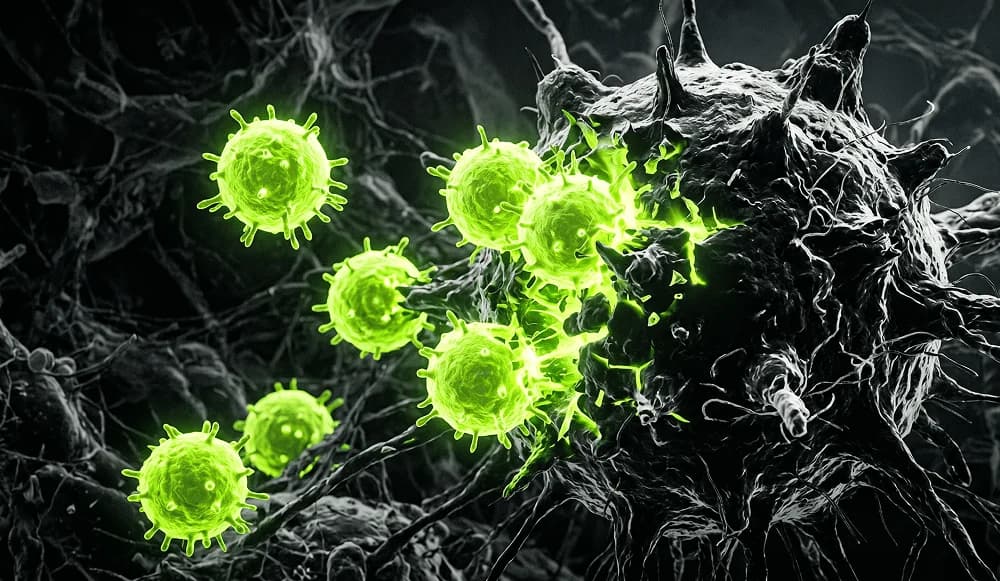
We tend to view cancer as a terrifying, random roulette of nature. But modern science paints a different picture: we all form cancer cells every single day — and we heal ourselves of them every single day. In the words of Harvard physician Dr. William Li: "I have seen the end of cancer."
This article explores the connection between longevity, our immune system, and cancer — and shows how targeted nutrition and breakthrough therapies (mRNA vaccines, microbiome modulation, checkpoint inhibitors) can raise our health defenses to a level we have never seen before.
The Invisible War: 10,000 Mutations Per Day
The human body consists of roughly 40 trillion cells. These cells divide constantly to renew tissue. During this never-ending "copy and paste" of our DNA, errors occur. Science estimates that in a healthy body, about 10,000 genetic copying errors (mutations) arise every 24 hours. Each of these mutations is potentially a microscopic cancer.
The reason we don't fall seriously ill all the time is our innate health-defense systems — above all the immune system. It patrols our body like a cellular police force, eliminating these microscopic threats before they grow into actual tumors.
The Problem of Immunosenescence
So why does cancer risk rise so steeply with age? Recent longevity research emphasizes the concept of immunosenescence — the aging of the immune system. As we age, the thymus (a key immune organ) shrinks, and chronic low-grade inflammation ("inflammaging") exhausts our T cells. Exhausted immune cells lose their ability to recognize cancer cells — and instead emit inflammatory signals that actively promote tumor growth.
The good news: Recent research shows that targeted physical training and muscle building can measurably reverse immunosenescence and turn so-called "cold" (immunologically inactive) tumors into "hot" (visible to the immune system) tumors.
Angiogenesis: How Cancer Feeds Itself — and How We Starve It
A microscopic tumor cannot grow larger than the tip of a ballpoint pen without its own blood supply. But cancer cells are manipulative: they release chemical signals to hijack the body's own vessel growth (angiogenesis).
For context: The smallest palpable breast cancer (about 1 cm) already consists of 1 billion cancer cells, supplied by roughly 100 million tiny blood vessels. As soon as just a single new blood vessel docks onto a tiny tumor, it can grow 16,000-fold within two weeks.
Nature provides us with molecular weapons to block this faulty angiogenesis (anti-angiogenesis):
- Green tea (matcha) & Earl Grey: Matcha contains highly concentrated polyphenols that have been shown to reduce blood supply to tumors and even kill cancer stem cells (responsible for relapses). Notably, Earl Grey also has remarkably potent anti-angiogenic properties.
- Tomatoes (cooked): The lycopene they contain cuts off blood supply to tumors. Large population studies show that men who eat cooked tomatoes 2–3 times a week (half a cup is enough) have a 29% lower risk of developing prostate cancer.
Our body regulates vessel growth wisely (the "Goldilocks zone"): healthy vessels are not affected by these foods.
The Microbiome Superstar: Akkermansia muciniphila
Immunotherapy is currently the biggest breakthrough in oncology. Instead of poisoning the body with chemotherapy, immunotherapy (e.g. checkpoint inhibitors like PD-1 blockers) "wakes up" the body's own immune system to attack the cancer. Dr. Li witnessed this with his own 80-year-old mother, whose stage 4 cancer was completely eliminated by immunotherapy.
But why does this therapy work brilliantly for some patients and not at all for others? Current science has found the primary difference in the human gut: the bacterium Akkermansia muciniphila.
Studies from 2025 and 2026 confirm that this bacterium has massive influence on the success of immunotherapies. It produces short-chain fatty acids, activates dendritic cells, and protects immune cells from rapid exhaustion. When this bacterium is missing, immunotherapy often fails.
How Do You Cultivate This Life-Saving Bacterium?
Akkermansia loves mucous membranes and certain plant nutrients. The best way to feed it:
- Pomegranate (juice)
- Cranberries
- Dark grapes
- Chili peppers
- Black Chinese vinegar
The Future: Personalized mRNA Cancer Vaccines
While Dr. Li describes how tumor genes are sequenced and AI-generated "wanted posters" are printed for the immune system (peptide vaccines), by 2026 science has already entered the age of mRNA-based cancer vaccines.
Similar to the COVID-19 vaccine, the genetic material of an individual patient's tumor is read (neoantigen screening). AI isolates the most dangerous mutations (the "smoking guns"). The patient then receives a tailor-made mRNA vaccine that shows the immune system exactly what their cancer cells look like.
Clinical trials are already showing immense success: The mRNA vaccine mRNA-4157, combined with classical immunotherapy, reduces the risk of relapse in melanoma by an astonishing 44%.
The "Shield Breakers": What Destroys Our Defenses
If we want to achieve longevity, we need to know what disables our cellular shields.
Microplastics
We unknowingly consume up to a credit card's worth of plastic per week. Studies find microplastics in the brain, the heart, and arteries. Men with plastic particles in their carotid arteries have a 400% increased risk of fatal heart attacks or strokes.
Tip: Get rid of plastic tableware. Be cautious with tea bags too — many release billions of tiny plastic particles in hot water (use loose-leaf tea instead).
Visceral Fat ("Skinny Fat")
Body fat itself is a useful organ. What's dangerous is the fat that crushes our organs deep in the abdomen (visceral fat). It forms from caloric excess and chronically suffers from oxygen deprivation. As a result, it continuously emits inflammatory substances into the body.
Even outwardly slim people with a lot of visceral fat have up to a threefold increased breast cancer risk. Visceral fat is associated with an increased risk of 14 different types of cancer in total.
Sleep Deprivation & Stress
Chronic stress floods the body with cortisol, derailing the immune system and metabolism. Only during deep sleep does the glymphatic system open — a kind of flushing system in the brain that transports neurotoxic waste products away. Those who chronically sleep too little age cognitively much faster.
Dr. Li's Practical Strategies for a Long Life
You don't need to follow rigid, extreme diet trends. Dr. Li recommends a relaxed, Mediterranean and Asian-inspired diet. His top 5 food categories:
| Category | Effect |
|---|---|
| Coffee & tea | Polyphenols burn harmful white fat by activating brown adipose tissue. |
| Tree nuts | Walnuts, almonds, pistachios — essential fiber, kill cancer stem cells. |
| Tomatoes | The anti-angiogenesis champion (lycopene). |
| Berries | Especially raspberries — extremely high fiber content, feeds the microbiome. |
| Leafy greens | Kale, bok choy, arugula — foundation of cellular health. |
The Longevity Fasting Trick
Fasting is excellent for the body, as metabolism shifts into fat-burning mode. The easiest path there: no snacks after dinner (e.g. at 8 p.m.). After 8 hours of sleep and consciously delaying breakfast by another hour in the morning, you effortlessly reach a fasting window of 12 to 16 hours — completely natural and without struggle.
Conclusion
We are not helpless prisoners of our genetics. Cancer is the end result when our immune system and angiogenesis control fall out of balance. Through a plant-forward diet, protecting our microbiome, sufficient sleep, and avoiding toxins like plastic and chronic stress, we can raise our body's own shields.
Combined with the medical wonders of mRNA vaccines and checkpoint inhibitors, the end of the disease as we know it is moving within reach.
- [1]Dr. William Li: Interview on nutrition, cancer, and the body's health defenses
- [2]PubMed search: Akkermansia muciniphila & immune checkpoint inhibitors
- [3]PubMed search: mRNA-4157 & melanoma (KEYNOTE-942)
- [4]PubMed search: Inflammaging & immunosenescence
- [5]PubMed search: Lycopene & prostate cancer
- [6]PubMed search: Microplastics in arterial plaques