Hyperbaric Oxygen Therapy (HBOT): Anti-Aging Hope or Expensive Hype?
HBOT is real medicine for wound healing, decompression sickness and CO poisoning. As a longevity therapy in healthy people, the evidence stays thin.

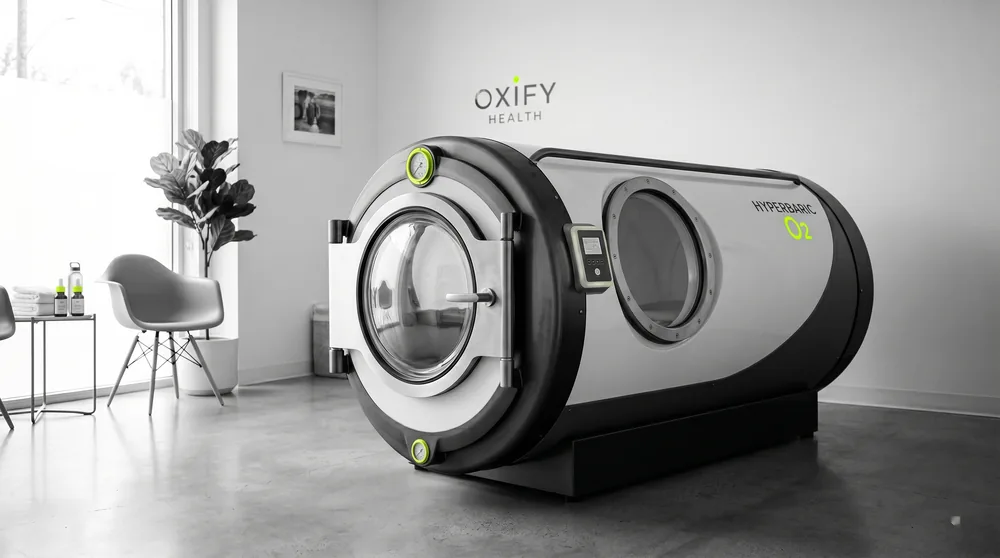
In hyperbaric oxygen therapy (HBOT) you breathe nearly 100% oxygen at increased ambient pressure (typically 2 atmospheres) inside a sealed hyperbaric chamber. This dissolves many times more oxygen into the blood and tissues. In medicine it's an established procedure — in the longevity scene a hyped "device." Bryan Johnson completed 60 sessions in his Blueprint protocol and reports striking biomarker changes. But what's actually proven?
The honest dividing line: HBOT is excellently supported for specific medical indications — but as a general anti-aging therapy in healthy people the evidence is thin and mostly preliminary. Lumping the two together is the most common mistake.
What HBOT is actually proven for
In mainstream medicine, HBOT is standard or recognized therapy for:
| Indication | Status |
|---|---|
| Decompression sickness (divers) | 🟢 established |
| Carbon-monoxide poisoning | 🟢 established |
| Poorly healing wounds (e.g. diabetic foot) | 🟢 established |
| Radiation injury after cancer therapy | 🟢 established |
| Certain severe infections | 🟢 established |
Here the mechanism is clear: more dissolved oxygen promotes healing, perfusion, and infection defense in oxygen-starved tissue.
The longevity claim: one study, a lot of hope
The attention on HBOT as an anti-aging tool rests mainly on one Israeli study (Hachmo et al. 2020): around 35 healthy older adults completed 60 sessions — after which the team measured longer telomeres and fewer senescent cells in the blood.
Context: that sounds spectacular but has limits: small sample, no true control group, not yet replicated at scale — and "blood biomarkers" isn't the same as "lived longer or healthier." Johnson's results are an n=1 single case on top. Intriguing as a hypothesis, not proof.
How it (probably) works
The suspected trick is the "hyperoxia-hypoxia paradox": the repeated steep swings in oxygen mimic a lack of oxygen for the cell and thereby trigger adaptation and repair programs — new blood vessels (angiogenesis), stem-cell mobilization, less inflammation. A hormetic stimulus, similar in principle to sauna or exercise — just via oxygen pressure.
The catches: cost, time, risks
- Effort: a protocol like Johnson's is 60 sessions of ~90 minutes — weeks of time and a substantial cost (your own chamber or a specialized clinic).
- Risks: ear pressure/barotrauma, with prolonged use myopia/cataract, rarely oxygen seizures; chambers with pure ambient oxygen carry a fire risk.
- Access: reputable devices and supervision aren't available everywhere.
Bottom line
HBOT is a fascinating case: clearly effective medicine for specific indications — and at the same time an expensive, time-intensive longevity experiment with a thin, if tantalizing, evidence base in healthy people. If you don't have a medical problem that requires HBOT, treat it as a hypothesis to watch, not proven anti-aging. The cheap, well-supported levers — sleep, exercise, nutrition, sauna — deliver far more per euro and per hour invested.
- [1]PubMed search: HBOT & wound healing / established indications
- [2]Hachmo et al. (2020): HBOT, telomere length & senescence in older adults — Aging
- [3]PubMed search: HBOT, cognitive function & aging
- [4]PubMed search: HBOT risks (barotrauma, oxygen toxicity)
- [5]Bryan Johnson — Blueprint (HBOT protocol & results)