Is Cancer a Metabolic Disease? The Seyfried–Warburg Theory, Honestly Assessed
Thomas Seyfried argues cancer is a mitochondrial metabolic disorder, not a genetic fate. An honest look at the thesis — and what prevention takes from it.

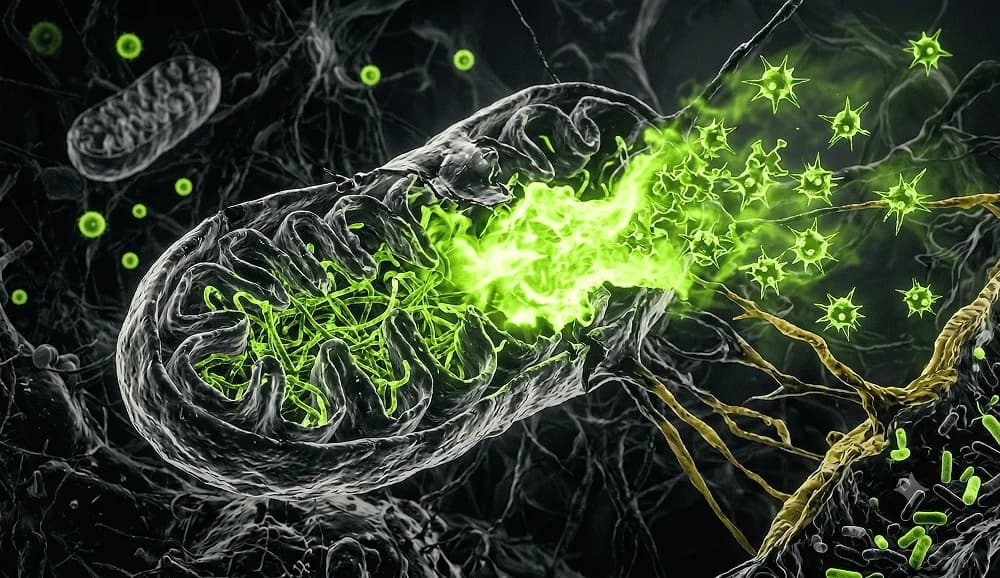
"When the medical establishment recognizes what I know about this disease, our current approach will be seen as the greatest tragedy in the history of medicine." That is the line Dr. Thomas Seyfried, a biology professor at Boston College, has repeated for years. His thesis rattles the foundations of oncology: cancer, he argues, is not a genetic disease but a mitochondrial metabolic disorder.
It's a fascinating — and, within the research community, hotly contested — position. This article explains the metabolic theory of cancer as fairly as possible, weighs it honestly against the scientific consensus, and distills what is actually solid for healthy people.
Framing up front: Seyfried's theory is a scientific minority position. The broad consensus in oncology (captured in the "Hallmarks of Cancer," Hanahan & Weinberg) sees cancer as a complex interplay of genetic mutations and altered metabolism — not as a pure mitochondrial problem. Nothing here is a treatment recommendation. For a cancer diagnosis, guideline-based oncology remains the gold standard.
Two theories at a glance
| Somatic mutation theory (consensus) | Metabolic theory (Seyfried) | |
|---|---|---|
| Origin of cancer | Mutations in the nucleus (DNA) | Damaged mitochondria in the cytoplasm |
| Role of genetics | Driver of the disease | Consequence, not cause |
| Tumor's energy source | Altered glycolysis, among others | Fermentation of glucose + glutamine |
| Therapeutic approach | Targeted drugs, immunotherapy | "Starving" via ketosis + glutamine blockade |
| Evidence status | Broadly established, clinical standard | Mechanistic + animal models, clinically unconfirmed |
The illusion of a purely genetic defect
The dominant view is the somatic mutation theory: cancer arises from random or environmentally driven mutations in the nucleus that trigger uncontrolled growth. Billions flow into sequencing tumor genomes and into targeted drugs.
Seyfried pushes back, invoking classic nuclear-transfer experiments:
- Transplant a mutated cancer nucleus into the cytoplasm of a healthy cell (with intact mitochondria), and that cell often keeps growing normally.
- Conversely, a healthy nucleus inside a cell with defective cytoplasm can trigger uncontrolled growth.
His conclusion: the problem sits not in the DNA but in the mitochondria (the cell's microscopic power plants that convert oxygen and nutrients into energy).
Caveat: These experiments (from Warburg's successors and groups such as Jerry Shay's) do exist — but they can be read differently. Critics note that the cytoplasm helps steer cell behavior without disproving the role of driver mutations (e.g. BRCA, TP53, KRAS). The two levels are not mutually exclusive.
The Warburg effect: fermentation over respiration
At its core, the idea isn't new. As early as the 1920s, German Nobel laureate Otto Warburg observed that tumor cells generate energy strangely — even with ample oxygen they shift toward fermentation (the Warburg effect, covered more in the piece on keto and insulin resistance).
Healthy cells burn energy efficiently with oxygen (oxidative phosphorylation). When mitochondria are damaged, Seyfried argues, the cell switches to an evolutionarily ancient backup program:
- Two fuels: Tumor cells preferentially ferment glucose (blood sugar) and glutamine (an amino acid abundant in the blood).
- Metabolic waste: This produces large amounts of lactic acid (from glucose) and succinic acid (from glutamine).
- The vicious cycle: Defective mitochondria produce ROS (reactive oxygen species — aggressive molecules that cause oxidative stress). These ROS in turn damage DNA. On this reading, the much-discussed mutations would be not the cause but a consequence of damaged mitochondria.
Context: That many tumors preferentially metabolize glucose and glutamine is undisputed — the Warburg effect is textbook knowledge and even underpins PET imaging. What's contested is solely Seyfried's causal claim that mitochondria come first and mutations come last. The consensus sees a two-way relationship.
Civilization, lifestyle, and statistics
Why do mitochondria break in the first place? Seyfried points to a mix of chronic stress, sleep deprivation, highly processed carbohydrates, physical inactivity, plus carcinogens and environmental toxins — themes we also explore in the piece on visceral fat & endocrine disruptors.
Epidemiologically, the burden is real: cancer is one of the leading causes of death in the modern world. The American Cancer Society projected over 2 million new diagnoses and roughly 611,000 deaths in the US for 2024. Globally, the WHO ranks cancer among the top causes of death.
Striking disparities show how strongly socioeconomic and environmental factors play in — CDC data document, for example:
- Prostate cancer: Black men have roughly double the mortality of white men.
- Breast cancer: White women have a higher absolute incidence, yet mortality is markedly higher among Black women.
Beware the shortcut: These differences are real but multifactorial — access to screening, quality of care, genetics and lifestyle interact. Reading them as proof of the metabolic theory overstretches the data. And the claim that "prehistoric peoples rarely had cancer" is explained largely by short life expectancy: cancer is predominantly a disease of older age.
Metabolic therapy — and its limits
If tumors live on glucose and glutamine, the intuitive move is to deprive them of exactly those fuels. Seyfried calls this metabolic therapy. Important: what follows is a hypothesis under investigation, not an established procedure.
1. The principle of ketosis
Healthy mitochondria can flexibly switch to ketone bodies (molecules produced in the liver during fat breakdown). Tumor cells with defective mitochondria, Seyfried argues, cannot use them well. Through fasting or a ketogenic diet, blood sugar drops and the body enters ketosis. Seyfried uses the Glucose Ketone Index (GKI) to track this — at low values, the tumor is said to lack fuel. (More on the mechanics of ketosis in the piece on fasting & autophagy.)
2. Glutamine inhibitors
Because tumors also ferment glutamine, diet alone is often not enough, per Seyfried. He points to the off-label use of certain agents that block glutamine metabolism — explicitly experimental and conceivable only under medical supervision.
A real toxicity profile: This is exactly where the problem lies. Glutamine isn't a pure "cancer fuel" — it powers many healthy, fast-dividing tissues, so a systemic blockade never hits the tumor alone. The main risks:
- Immunosuppression — lymphocytes (T and B cells) are heavily glutamine-dependent. A blockade weakens precisely the immune system oncology actually wants to strengthen. A paradox for a "metabolic cancer therapy."
- Gastrointestinal toxicity — gut enterocytes are among the body's largest glutamine consumers. The result: mucositis, diarrhea, nausea, vomiting. This was historically the dose-limiting side effect of the classic agent DON.
- Bone marrow suppression — fewer blood and immune cells.
- Neurotoxicity — glutamine/glutamate is tightly coupled to neurotransmitter balance; with the older compounds, a genuine problem.
Newer prodrugs and selective glutaminase inhibitors aim to release the agent more selectively inside the tumor — still in clinical testing, not a standard.
3. Hyperbaric oxygen therapy (HBOT)
Combining ketosis with pressurized oxygen is meant to generate oxidative stress specifically inside tumor cells, while healthy cells (running on ketones) are spared. Intriguing in theory — the clinical evidence in humans is so far thin.
A hard limit: For none of these three building blocks is there robust randomized evidence of a survival benefit as monotherapy. Ketogenic diets are, at most, being studied as an adjuvant (complementary) strategy — not as a replacement for surgery, radiation, or chemotherapy. Anyone with a cancer diagnosis should never unilaterally forgo standard treatment.
The Pablo Kelly case — a single case, not proof
Seyfried likes to cite Briton Pablo Kelly, diagnosed in 2014 with a glioblastoma (the most aggressive brain tumor). Kelly declined standard therapy, strictly changed his diet, and monitored his GKI. His tumor grew unusually slowly; he lived roughly ten years with the diagnosis and died in 2024 from a surgical complication, not primarily from tumor growth.
Anecdote, cleanly labeled: This is a remarkable single case — but a single case. Glioblastomas show enormous variability in course; rare long-term survivors exist under standard therapy too. One patient without a control group can neither prove nor rule out efficacy. That is exactly what controlled trials are for.
What stays solid for healthy people
Here the theory turns practical — and surprisingly uncontroversial. Because the preventive levers of the metabolic view overlap almost entirely with well-supported longevity practice. They make sense whether or not Seyfried's causal chain holds, because they improve mitochondria, insulin sensitivity, and inflammatory load.
| Lever | What it does | Established benefit |
|---|---|---|
| Cut processed carbohydrates | Lowers blood sugar and insulin spikes | Strong (metabolic health) |
| Regular exercise (strength + Zone 2) | Builds mitochondria, improves glucose handling | Strong |
| Time-restricted eating / fasting | Activates autophagy, lowers insulin | Moderate–strong |
| Sleep & stress regulation | Reduces chronic inflammation | Strong |
| Avoid environmental toxins | Less oxidative burden | Plausible |
The honest takeaway: You don't have to believe Seyfried's radical thesis to benefit from his lifestyle advice. That's the fair reading: the metabolic theory as the sole cause of cancer is not scientifically established — but as a reminder that metabolic health, exercise, and nutrition help shape cancer risk, it fits squarely within established prevention.
Bottom line
Do Seyfried's claims mean the end of oncology? No. They are a serious but as-yet-unproven minority position — valuable as food for thought, dangerous as a directive to refuse medical treatment.
For healthy people the message is simple and solid: caring for your mitochondria — through exercise, sleep, periodic fasting, and avoiding ultra-processed carbohydrates — is an investment in metabolic health that demonstrably lowers the risk of many chronic diseases. Whether it "shuts off the tap" on cancer in Seyfried's sense remains open. The prevention is worth it regardless — and that is the honest overlap between a provocative outsider theory and settled science.
- [1]Dr. Thomas Seyfried on *Diary of a CEO*: "Cancer Is A Metabolic Disease, Not Genetic" (basis for this article)
- [2]Seyfried, T. N. (2012): Cancer as a Metabolic Disease — Wiley (foundational text)
- [3]Seyfried et al. (2014): Cancer as a metabolic disease: implications for novel therapeutics — Carcinogenesis
- [4]Hanahan & Weinberg (2011): Hallmarks of Cancer — The Next Generation (mainstream framework)
- [5]PubMed search: Warburg effect & aerobic glycolysis in tumors
- [6]PubMed search: ketogenic diet as adjuvant cancer therapy (clinical trials)
- [7]American Cancer Society: Cancer Facts & Figures 2024
- [8]CDC: Cancer Health Disparities (breast and prostate cancer)