Keto, Insulin Resistance and the Aging Brain: Why Ketones Are the 'Clean' Fuel
Insulin resistance as a silent epidemic — why ketones are a 'cleaner' brain fuel, what the sardine challenge actually does, and when keto makes clinical sense.

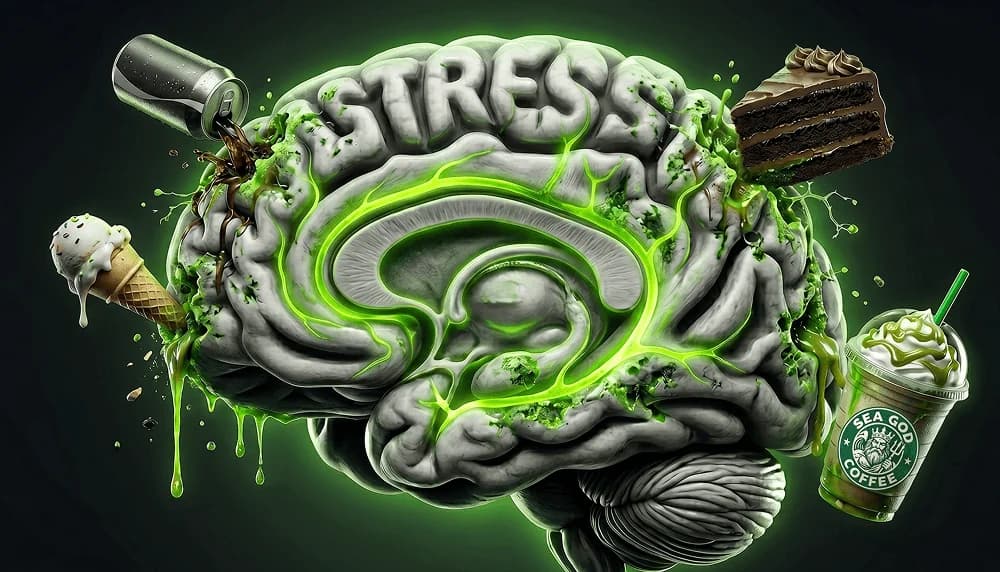
It's a radical concept that at first glance looks like a quirky internet trend: the sardine challenge — eating nothing but canned sardines for three days to force the metabolism out of sugar-burning and into fat-burning. For Dr. Annette Bosworth ("Dr. Boz"), board-certified internal medicine physician with over 25 years of clinical experience, this is not a fad but a clinical tool.
In her conversation with Steven Bartlett, she puts forward a provocative thesis: modern medicine is excellent at managing symptoms but often fails at root causes. The real enemy, she argues, is chronic insulin resistance — a state in which the body permanently produces too much insulin, leading not only to obesity but also to accelerated brain aging.
The silent epidemic: Insulin resistance
To understand keto, you have to understand its opposite: insulin — a vital anabolic hormone whose main job is to move glucose from the bloodstream into cells and store excess energy as fat.
In a world dominated by ultra-processed carbohydrates and late meals, glycogen stores (the short-term carb reserves in liver and muscle) are chronically full. The body responds by secreting more and more insulin. This state often goes unnoticed for decades — blood glucose stays in the normal range because of the high insulin levels, while the underlying resistance silently grows.
Dr. Bosworth describes this invisible insulin excess as a chronic source of inflammation that actively blocks cellular repair and the clearance of metabolic byproducts.
Clinical warning signs before blood glucose becomes abnormal
Even when standard bloodwork still looks fine, several signs can hint at insulin resistance:
| Sign | What it means | Specificity |
|---|---|---|
| Growing waist circumference | Visceral fat is increasing — the most metabolically active fat type. | High |
| Acanthosis nigricans | Velvety, dark skin discoloration (neck, skin folds). | High — well-established in endocrinology. |
| Skin tags | Benign skin tags, often under the armpits. | Associated (Sari et al. 2010); causality not definitive — other drivers possible. |
| Hair loss on toes/lower legs | Unspecific peripheral marker — more typical of advanced peripheral arterial disease (PAD), indirectly tied to diabetes pathology. |
Important: These signs do not replace lab testing. If you suspect insulin resistance, request fasting insulin + fasting glucose and calculate the HOMA-IR index — it's significantly more telling than HbA1c alone and reveals insulin resistance years before glucose becomes abnormal.
Ketosis: An evolutionary survival mode as a cellular lever
When carbohydrate intake drops below roughly 20 g per day and glycogen stores empty out, the body is forced to switch energy sources. The liver begins converting fats into ketone bodies — primarily beta-hydroxybutyrate (BHB).
What BHB does in the body
| Effect | Mechanism |
|---|---|
| Cleaner combustion | Ketones produce less oxidative stress and reactive oxygen species (ROS) in mitochondria than glucose. |
| Direct brain fuel | In neurodegenerative diseases (Alzheimer's = framed in research as "type 3 diabetes"), brain cells often can no longer take up glucose efficiently. Ketones use the MCT1 transporter and deliver energy where glucose is blocked. |
| Satiety signals | BHB demonstrably stimulates GLP-1 and CCK — the same pathways that modern weight-loss injections target. |
| HDAC inhibition | BHB acts as an endogenous histone deacetylase inhibitor, shifting gene expression in an anti-inflammatory direction. |
Scientific context
Dr. Bosworth reports anecdotal successes — cognitive improvements in a patient with Down syndrome and early Alzheimer's dementia, or gray hair re-darkening. These are individual cases, not study endpoints. What controlled research consistently shows: ketones can dampen neuroinflammation and improve brain metabolism in measurable cognitive decline (Cunnane et al. and subsequent ketone-PET-imaging work).
Endogenous vs. exogenous: The BHB described here is made by the body itself — from fat, during fasting or carb restriction. That's distinct from exogenous ketones (BHB salts/esters) that you drink: they raise blood levels acutely but bypass the fat-burning that may be the actual mechanism. An interesting tool for acute use — but no substitute for the metabolic work of fasting and diet.
The practice: Keto Continuum and the sardine challenge
For many people, getting into ketosis is brutal — the brain's reward system craves sugar, and a strongly insulin-resistant body often takes several days to produce meaningful ketones at all.
Bosworth's solution: the sardine challenge. 72 hours of nothing but sardines in oil.
Why sardines?
- Extremely rich in omega-3 fatty acids (EPA/DHA)
- High-quality protein
- Zero carbohydrates
- Operationally simple (open can, eat — no decisions)
Mechanism:
- Blood glucose stays flat.
- Insulin drops sharply.
- The high fat content forces the liver into ketone production.
- The monotony emotionally decouples food — eating becomes pure nutrient intake again.
Caveat: Bosworth mentions patients who lasted 100 days — that's a clinical extreme case under medical supervision, not a self-help template. For healthy adults the classic 72 hours is a reasonable reset. People with type-1 diabetes, kidney or thyroid conditions, or who are pregnant should clear it with a physician beforehand.
Timing: Why late meals hurt the most
Even with clean macros, Bosworth warns about late meals. Eating at night forces high insulin secretion. When cortisol physiologically rises in the morning (which lifts blood glucose to wake us up), it meets circulating nighttime insulin — a metabolically poor cocktail that blocks morning fat burning and spikes postprandial glucose more sharply than the same meal eaten at noon.
Practically: last meal 3–4 hours before bedtime. This single rule shows significant insulin-sensitivity effects in time-restricted-eating studies, independent of calories.
The microbiome paradox
Cutting carbs and fiber raises the obvious concern: what about the gut microbiome?
Mainstream gastroenterologists cite fiber as food for "good" gut bacteria, which produce the short-chain fatty acid butyrate — protective for the mucosa, anti-inflammatory.
Bosworth's argument: in a ketogenic state, beta-hydroxybutyrate circulates in the blood, and BHB is chemically closely related to butyrate. Both inhibit HDAC enzymes, both have anti-inflammatory effects. The systemic effect can be similar — even without massive fiber intake.
Realistic framing: the thesis is plausible and partially supported, but butyrate has gut-specific functions that blood BHB doesn't 1:1 replace. Long-term very-low-fiber eaters should monitor their microbiome (stool testing) and strategically include fermented foods or prebiotics.
Vitamin D, magnesium, creatine & exogenous ketones
Vitamin D: fat-soluble, often "trapped" in adipose tissue in strongly insulin-resistant people, and unavailable to cellular metabolism (Wortmann/Lagunova series). When insulin drops and fat mobilizes, blood vitamin D levels often rise measurably even without extra supplementation.
Magnesium: cofactor for over 300 enzymatic processes, central to ATP production. When entering ketosis, magnesium and sodium are often lost via diuresis — supplementing isn't a luxury here. See Magnesium-Glycinat.
Creatine: not just for muscle. Forbes et al. (2023) meta-analyses show a clear cognitive boost — especially under sleep deprivation and stress. See Kreatin-Monohydrat.
Exogenous ketones (BHB salts or esters): deliver BHB directly into the blood. Important caveat: they don't necessarily signal the liver to produce more endogenously — quite the opposite, high exogenous levels can briefly suppress endogenous production. Useful as an acute brain-energy boost (workout, cognitive tasks) or to bridge keto-adaptation, not as a substitute for the dietary shift itself.
The Warburg effect — and why keto for cancer is experimental
Otto Warburg discovered in the 1920s that many cancer cells get their energy almost entirely via anaerobic glycolysis (even in the presence of oxygen — hence aerobic glycolysis). The hypothesis: cut the tumor off from glucose, weaken it.
Bosworth used this approach adjuvantly in her own mother's cancer treatment. What the research says: there's experimental data on ketogenic diets as adjunct therapy in certain glioblastomas, pancreatic and prostate cancers (Klement group). But: keto is not a standalone cancer therapy and should never be used as a sole strategy without oncology supervision. The approach is adjuvant — addition, not replacement.
Conclusion: Heal the cell, not the symptom
Dr. Annette Bosworth's approach is a passionate case for metabolic self-responsibility. Whether cancer support, chronic fatigue, or cognitive decline — the goal is always to restore the underlying metabolic architecture of the body instead of just managing symptoms.
Practically that doesn't mean everyone has to be in ketosis. It means: chronically over-producing insulin carries an invisible biological cost — and the bill compounds over decades. Anyone who knows their own insulin status (HOMA-IR), structures their eating window (no nighttime snacking), trains metabolic flexibility (occasional fasting, occasional keto phases), and covers micronutrients cleanly — has captured most of the Bosworth doctrine without 100 days of sardines.
- [1]Dr. Annette Bosworth on *The Diary of a CEO* (May 2026 — basis for this piece)
- [2]de la Monte & Wands (2008): Alzheimer's Disease Is Type 3 Diabetes — Journal of Diabetes Science and Technology
- [3]Cunnane et al.: Ketones and brain energy in Alzheimer's — Frontiers in Molecular Neuroscience
- [4]PubMed search: Beta-hydroxybutyrate as an HDAC inhibitor
- [5]PubMed search: Ketogenic diet & Warburg effect in cancer (Klement et al.)
- [6]PubMed search: GLP-1 & ketone bodies
- [7]PubMed search: Vitamin D bioavailability in obesity (Wortmann/Lagunova)
- [8]Sari et al. (2010): Skin tags & insulin resistance — Indian Journal of Dermatology
- [9]Dr. Annette Bosworth: *Any Way You Can* & *The Keto Continuum* (clinical application of ketosis)