Oral Health & Longevity: Why Your Gums Help Decide Heart and Brain Health
Periodontitis is linked to heart attack, diabetes and dementia — and the oral microbiome even regulates blood pressure. How to care for your mouth properly.

Oral care is treated as cosmetics — yet it's one of the most underrated longevity levers. The mouth isn't a sealed-off antechamber but a gateway to the whole body: chronic gum inflammation is linked to heart attack, diabetes, and even dementia — and the bacteria in your mouth even help regulate your blood pressure via a detour. Bryan Johnson, too, takes oral care strikingly seriously in his Blueprint protocol.
The oral–systemic axis
| Oral finding | Associated with | Evidence |
|---|---|---|
| Periodontitis (gum-bed inflammation) | Cardiovascular disease | 🟡 consistent association |
| Periodontitis | Type-2 diabetes (both directions) | 🟡 well supported |
| P. gingivalis (perio pathogen) | Atherosclerotic plaques, Alzheimer's brains | 🟠 mechanistic/associative |
| Disrupted oral microbiome | Higher blood pressure (nitrate–NO path) | 🟡 mechanistic + RCT signal |
Honestly assessed: these are mostly associations. That treating gum disease prevents heart attacks isn't yet conclusively shown in endpoint trials — causality is plausible but not finally proven. Still: oral health is cheap, low-risk, and sensible in every respect. A classic "low risk, high upside" lever.
Why the mouth acts on the body
Two mechanisms stand out:
1. Chronic inflammation & bacterial spread. Inflamed gums are an open wound through which bacteria and inflammatory mediators enter the bloodstream. The periodontitis pathogen Porphyromonas gingivalis has been detected in arterial plaques and in Alzheimer's brains — a hint (not a proof chain) that oral inflammation echoes systemically.
2. The oral microbiome & your blood pressure. Nitrate-reducing bacteria on the tongue convert nitrate from green vegetables into nitrite — the precursor of nitric oxide (NO), which dilates vessels. We dig into this pathway in the piece on nitric oxide & the blood vessels. The uncomfortable consequence: aggressive antiseptic mouthwash decimates these good bacteria and can slightly raise blood pressure.
The care trap: not everything that "disinfects" is good
The reflex "more disinfection = healthier" backfires in the mouth. You want to remove the harmful deposits without torching the beneficial microbiome.
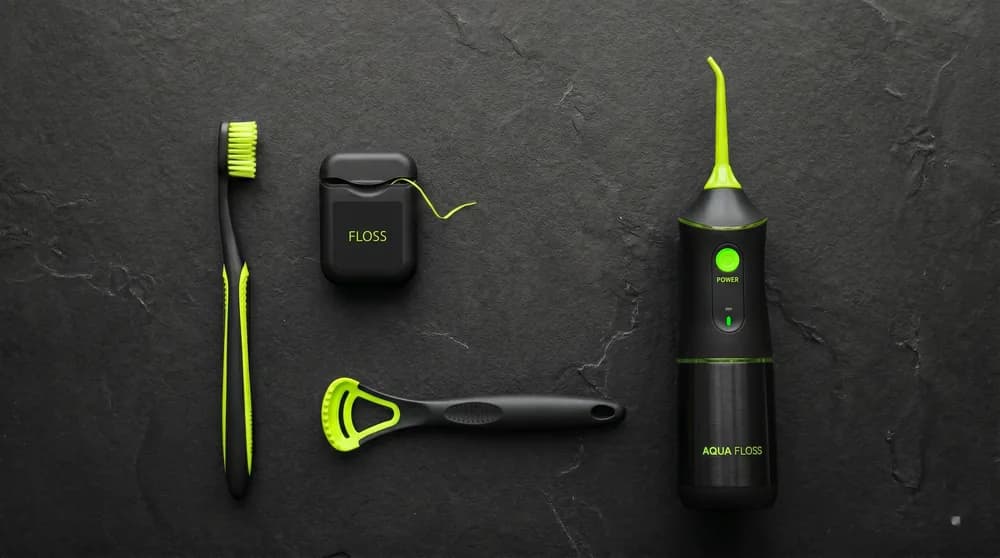
- Sensible: mechanical cleaning (brush, floss/interdental, tongue scraper), fluoride toothpaste (well-supported cavity protection), less sugar.
- With caution: daily antiseptic mouthwash (chlorhexidine, harsh Listerine types) as a permanent routine — it also hits the nitrate-reducing bacteria. Fine short-term for acute indications, not as a daily driver.
This mirrors Johnson's protocol exactly: Waterpik, floss, tongue scraper — and he discontinued a harsh antiseptic (tea tree oil) once his oral flora was healthy.
The evidence-based oral protocol
| Step | Why |
|---|---|
| Brush 2× daily (fluoride, soft bristles) | Cavity protection, plaque removal |
| Floss / interdental 1× daily | Cleans where the brush can't reach (the gums!) |
| Tongue scraper | Reduces biofilm, supports bacterial diversity |
| Cut sugar & sticky carbs | Starves the harmful microbes |
| Antiseptic mouthwash only targeted | Spares the nitrate–NO microbiome |
| Professional cleaning 2×/year | Removes hardened tartar, early detection |
| Take bleeding gums seriously | Early sign of inflammation — get it checked |
Bottom line
Oral health isn't a beauty topic but part of your systemic health: inflamed gums echo all the way to the heart and probably the brain, and your oral microbiome even has a say in blood pressure. The measures are unspectacular and cheap — clean mechanically, cut sugar, don't rinse the microbiome away, check in regularly. One of the best effort-to-payoff levers there is, and one that belongs in any longevity routine.
- [1]PubMed search: periodontitis & cardiovascular disease
- [2]PubMed search: periodontitis & diabetes (bidirectional)
- [3]PubMed search: Porphyromonas gingivalis & Alzheimer / atherosclerosis
- [4]Kapil et al. (2013): nitrate-reducing oral bacteria & blood pressure
- [5]PubMed search: antiseptic mouthwash & oral microbiome
- [6]Bryan Johnson — Blueprint (oral-care protocol)