Lithium Microdosing: What the Research Actually Shows
Lithium as a trace element for the brain: the 2025 Nature study on lithium deficiency & Alzheimer's, drinking-water data on suicide and dementia, lithium in foods, microdose vs. high dose — and where the biohacking hype outruns the evidence.

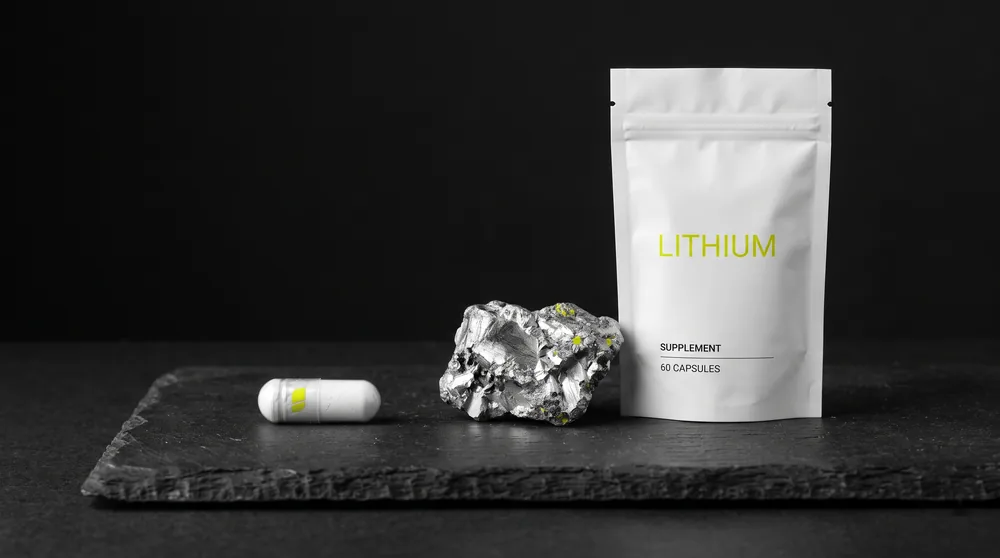
Most people associate lithium with two things: the battery in a phone or an EV — and a high-dose drug from psychiatry. Both images obscure what lithium actually is: a natural trace element we take in every day through water and food, in tiny amounts.
Since 2025 the debate has reignited. A landmark paper from Harvard suggests that a lithium deficiency in the brain may play an early, driving role in the onset of Alzheimer's — and that a microdose of lithium reverses the damage in animal models. That has poured fuel on the already-growing biohacking trend of "lithium microdosing."
Time for a sober look. What's established, what's extrapolation, and where exactly does the hype outrun the data? One thing up front, blurred by almost every article and YouTube video: microdosing and high-dose therapy are two entirely different worlds — separated by a factor of 100 to 1000. Conflating them produces wrong conclusions in both directions.
Claim vs. evidence at a glance
| Claim | What the evidence shows | Verdict |
|---|---|---|
| Lithium is a natural trace element we get from food/water | Correct; intake ~0.7–3 mg/day, highly soil-dependent | 🟢 established |
| High-dose lithium works in bipolar & as add-on in depression, lowers suicide risk | Established psychiatric evidence (under blood-level monitoring); suicide signal real but newer RCTs mixed | 🟢 established (therapy, not microdose) |
| Lithium deficiency drives Alzheimer's; microdose orotate reverses damage | Strong mouse data + epidemiology (Nature 2025) — but no human microdose studies | 🟡 promising, preclinical |
| Drinking-water lithium ↔ less suicide, dementia, mortality | Consistent ecological correlations (Zarse, Kessing, meta-analyses) | 🟡 correlational, not causal |
| Microdose (1–5 mg) protects nerves, lifts brain fog, slows aging | Plausible mechanism (GSK-3β, BDNF, autophagy), but effect in healthy people clinically unproven | 🟠 emerging |
| Lithium orotate is generally "more bioavailable" than carbonate | Old, weakly supported claim; the Nature superiority is a specific mouse finding | 🔴 overstated |
Lithium is a trace element — not a battery metal
Lithium is a light metal that occurs in traces everywhere: in soil, rock, ground- and drinking water, and therefore in plant and animal foods. The human body holds only a few milligrams total. Average daily intake, depending on region, is roughly 0.7 to 3 mg of elemental lithium — almost all of it from grains, vegetables and water.
Officially, lithium is not classified as an essential trace element — there is no recognized deficiency disease and no official intake recommendation. But some researchers (notably Gerhard Schrauzer) proposed a provisional minimum intake of around 1 mg/day decades ago, based on animal data and population observations. Current Alzheimer's research has abruptly pulled that old idea — lithium as a neglected nutrient — back into the spotlight.
The 2025 Nature study: lithium deficiency as an Alzheimer's driver
This is why the topic is suddenly exploding. A 2025 Nature paper from the lab of Bruce Yankner (Harvard Medical School) re-measured lithium's role in the aging brain. The key findings:
- The researchers screened 27 different metals in human brains. Only one was already abnormally depleted at an early stage (mild cognitive impairment, MCI): lithium.
- The mechanism is elegant and unsettling at once: amyloid-beta binds and sequesters lithium — it strips the brain tissue of available lithium and creates a functional deficiency right where the disease begins.
- In the mouse model, lowering the brain's own lithium by about half increased amyloid deposits and tau tangles, drove pro-inflammatory microglial activation, caused loss of synapses, axons and myelin, and accelerated cognitive decline — mediated largely through the enzyme GSK-3β.
- Conversely: giving the mice lithium orotate at a very low, micromolar dose in their drinking water reversed the damage — amyloid and tau declined, memory recovered, even in old animals with advanced disease.
Two details matter for the supplement debate. First: lithium carbonate (the classic psychiatric form) was the least effective compound in this study — likely because amyloid captures it especially easily. Lithium orotate worked best and, at the effective dose, was non-toxic. Second: the effective dose was in the microdose range, orders of magnitude below the psychiatric dosing.
Reality check — before the euphoria takes over: These are mouse plus epidemiology data. To date there is no controlled human study showing that microdosed lithium orotate prevents Alzheimer's or improves cognition in healthy people. Yankner himself explicitly warns against self-supplementing until the safe and effective human dose is established — a clinical trial is only in planning. And we have to be honest: earlier human lithium trials (e.g. in dementia prevention) have partly missed their cognitive endpoints. A promising mechanism ≠ a proven therapy.
Microdose vs. high dose: two entirely different worlds
This is the most important paragraph of the whole article — and where most misunderstandings arise.
| High dose (therapy) | Microdose (supplement) | |
|---|---|---|
| Typical dose | 150–1200 mg lithium carbonate/day | ~1–5 mg elemental lithium/day |
| Form | Lithium carbonate (prescription) | Usually lithium orotate (over the counter) |
| Goal | Bipolar disorder, treatment-resistant depression | "Nerve protection," prevention, biohacking |
| Blood level | 0.6–1.2 mmol/L, closely monitored | Not meaningfully raised |
| Monitoring | Regular blood, kidney, thyroid | No routine monitoring needed |
| Side-effect profile | Tremor, weight gain, thyroid, kidney | Barely known at correct dose |
| Evidence | 🟢 strong (psychiatry) | 🟠 emerging (preclinical/epidemiological) |
The difference is not gradual but categorical — roughly a factor of 100 to 1000. At the high dose the therapeutic window is notoriously narrow: too little doesn't work, slightly too much becomes toxic, hence the tight blood monitoring. At the microdose you're topping up a physiological pool, like a trace element — the classic high-dose toxicity risks are essentially irrelevant as long as you keep the dose low.
But that also means the strong psychiatric evidence cannot be transferred to the microdose. That lithium at therapeutic doses works in bipolar disorder says nothing about whether 2 mg a day protects a healthy brain. And vice versa.
High-dose lithium in psychiatry: depression & suicide
Because this regularly gets muddled: at high doses, lithium is one of the best-studied psychiatric drugs there is.
- Bipolar disorder: lithium has been the gold standard for phase prophylaxis for decades.
- Unipolar depression: in treatment-resistant depression, lithium augmentation (lithium added to an antidepressant) is one of the best-supported add-on strategies.
- Suicide prevention: meta-analyses in mood disorders (classically Cipriani et al. 2013, BMJ) showed a lower suicide risk on lithium. In fairness: newer, methodologically stricter RCTs (including a large US veterans study) found no significant benefit and were partly stopped for futility. The anti-suicide signal is real but more contested than often portrayed.
The crucial point remains: all of this applies to the medically monitored therapeutic dose — not a 5 mg capsule off the internet. Anyone suffering from depression or bipolar disorder belongs in medical care; microdose self-medication is no substitute and potentially dangerous.
The drinking-water studies: suicide, dementia, mortality
The most fascinating data trail for the microdose comes from epidemiology: regions whose drinking water naturally contains more lithium score better on several psychiatric and neurological metrics.
- Suicide: from Schrauzer's Texas data (1990) through Ohgami's Japanese prefectures (2009) to current meta-analyses, the pattern is consistent: more lithium in the water, statistically lower suicide rates (pooled effects sometimes sizable).
- Dementia: a Danish nationwide study (Kessing et al. 2017, JAMA Psychiatry) found an association between drinking-water lithium and dementia incidence — but non-linear (moderate levels fared best).
- All-cause mortality & longevity: the widely cited work by Zarse et al. (2011) linked higher drinking-water lithium across 18 Japanese municipalities (1.2 million people) to lower all-cause mortality — and showed in parallel that low-dose lithium extends the lifespan of the nematode C. elegans.
Caveat — correlation is not causation: these are ecological studies (they compare regions, not individuals). They are prone to the ecological fallacy, to confounders (wealthier areas, different water quality) and to publication bias — both were discussed in the meta-analyses. They give a strong hint that lithium plays a physiological role for brain and mind, but no proof that a supplement delivers the same effects in an individual.
How lithium works in the brain
Why does longevity research care about such a small ion? Because lithium acts at several central hubs of cellular aging:
- GSK-3β inhibition: lithium brakes this enzyme — the same hub through which the Alzheimer's damage ran in the Nature study. GSK-3β is involved in tau phosphorylation, inflammation and cell stress.
- BDNF & neurogenesis: lithium raises BDNF (brain-derived neurotrophic factor), a growth factor you can picture as "fertilizer" for nerve cells. Chronic stress lowers BDNF; lithium pushes the other way.
- Autophagy — the cellular waste disposal: lithium induces autophagy, the process by which cells break down and recycle damaged components and misfolded proteins (Sarkar & Rubinsztein mapped the route via inositol depletion). This "clean-up" is impaired in neurodegenerative disease — it's the same mechanism addressed by fasting and autophagy.
- Glutamate buffer & neuroprotection: too much glutamate between nerve cells is excitotoxic (the cell "overheats"). Lithium dampens this overexcitation and so protects the neuronal reserve.
These mechanisms are well established — mostly in cell and animal models and often at higher concentrations. The leap from "lithium inhibits GSK-3β in a dish" to "2 mg a day protects my brain in daily life" is exactly the gap current research still has to close.
Lithium & longevity
Beyond pure neuroprotection, lithium has become a longevity candidate: the C. elegans data from the Zarse work, the human mortality correlations and the autophagy induction all fit the picture of a substance that nudges cellular maintenance. In worm and partly mouse research, low-dose lithium is one of the few interventions that reproducibly extend lifespan a little.
That's scientifically exciting — but it stays at "a little" and "in a model organism." Extrapolating to the human lifespan is, so far, pure speculation.
Which foods contain the most lithium
The first, uncontested lever is diet. Lithium content varies strongly with the soil a food grew in, so specific values are always approximations. A 2024 market analysis (over 1,000 samples) yielded roughly this ranking:
| Food group | Relative lithium content | Examples |
|---|---|---|
| Leafy vegetables | highest | lettuce, spinach, cabbage |
| Bulbous vegetables | high | onions, garlic, leek |
| Nuts & seeds | high | pistachios, cashews, sunflower seeds |
| Grains (whole) | high (largest share of total intake) | wheat, oats, rye |
| Legumes | medium-high | lentils, chickpeas, beans |
| Fruit | medium | variety/soil dependent |
| Root vegetables | medium | potatoes, carrots |
| Dairy / eggs | lower | |
| Meat | lowest | |
| Mineral water | highly variable | some springs contain a lot |
In practice, in many regions grains supply the largest share (sometimes over 60% of total intake), followed by vegetables and water. A plant-forward, whole-food diet with plenty of vegetables, whole grains like oats, legumes like lentils and nuts like walnuts covers the baseline most reliably — while delivering the full range of other longevity nutrients. Anyone living in a region with especially lithium-poor soil and water may not reach the amounts that stood out as protective in the drinking-water studies — which is where the supplement discussion begins.
Lithium orotate as a supplement: dose, quality, the bioavailability question
If you're interested in a supplement despite the thin human evidence, understand three things.
1. The form. What's sold is almost always lithium orotate. The widespread claim that orotate is generally "more bioavailable" and crosses the blood-brain barrier more easily traces back to physician Hans Nieper (1970s) and is weakly supported in humans. The 2025 Nature study did find orotate more effective than carbonate — but that was a specific finding in the amyloid model (amyloid captures carbonate-lithium more easily), not a general proof of superior absorption. Honestly: orotate is the usual supplement form, but the "miracle bioavailability" is marketing on a thin basis.
2. The dose — and the label trap. Typical products deliver 1–5 mg of elemental lithium per capsule. Watch out: some labels state the amount of the orotate salt, others the amount of elemental lithium — these can differ by more than twenty-fold. Check which is meant. For starting out: begin low (some split the capsule or take it every other day) and observe over 4–8 weeks. Effects on the nervous system build slowly; it's not an espresso.
3. The quality. Lithium is a metal — buy only from manufacturers with a current lab analysis for heavy-metal purity (lead, cadmium, arsenic). You want to unburden the system, not add to it.
Safety, side effects & interactions
At correct microdoses, the notorious high-dose side effects (tremor, weight gain, thyroid and kidney problems) are not expected — they come from a dose range 100 to 1000 times higher. Still, "low-dose" is not the same as "harmless for everyone":
- Kidneys: lithium is excreted via the kidney and affects fluid balance. With kidney disease, clear it with a doctor first; in general, drink enough.
- Interactions that raise lithium levels: NSAIDs (ibuprofen & co.), ACE inhibitors and thiazide diuretics can raise lithium levels — relevant mainly when higher amounts are already in play.
- Serotonergic drugs: do not combine lithium on your own with antidepressants (especially SSRIs/SNRIs) or other psychiatric drugs — risk of adverse interactions up to serotonin syndrome. Only under medical supervision.
- Pregnancy/breastfeeding: at therapeutic doses lithium is associated with malformation risk; do not supplement in pregnancy without medical advice.
- No self-treatment of depression, bipolar disorder or dementia with microdose orotate. These are medical diagnoses with established therapies.
Important: if you take medication or have a pre-existing condition, discuss even the microdose with your doctor first. That's not fear-mongering — with a substance that genuinely acts on the nervous system, it's simply sensible.
What's overstated — the honest framing
- "Microdose lithium is a proven brain protector": No. The mechanism is strong, the animal and epidemiology data are exciting — but the controlled human microdose study is missing. The status is emerging, not established.
- "The Nature study proves lithium orotate cures Alzheimer's": No — it shows that in mice. The human trial is only planned, and the lead researcher explicitly advises against self-supplementing.
- "Orotate beats every other form thanks to bioavailability": weakly supported; the superiority held in one specific disease model.
- "A lithium capsule fixes my brain fog/stress": possible, but unproven — and the more obvious levers are sleep, exercise, stress management and, if needed, evidence-based basics like magnesium glycinate or omega-3. Don't chase every hype; it also saves money.
Bottom line
Lithium earns its place in the longevity conversation — not as a battery metal and not as a psychiatric sledgehammer, but as a trace element with a plausible, mechanistically well-grounded role for brain and aging. The 2025 Nature work turned an old footnote (lithium as a neglected nutrient) into a serious research field: lithium deficiency may sit at the root of neurodegenerative processes.
But the data on microdosing in healthy people is not as far along as the hype suggests. What's certain today: a plant-forward, whole-food diet covers the baseline, and at high doses lithium is an established but strictly monitored medication. What's not certain today: that a 5 mg capsule measurably protects the healthy brain.
The sensible stance is thus neither dismissal nor euphoria: watch the field, go through diet first, and use a supplement — if at all — only at a low dose, lab-tested and after medical consultation. When the planned human studies deliver, we'll update this article.
- [1]Aron et al. / Yankner Lab (Nature 2025): Lithium deficiency and the onset of Alzheimer's disease
- [2]Harvard Medical School (2025): Could Lithium Explain — and Treat — Alzheimer's Disease?
- [3]Zarse et al. (Eur J Nutr 2011): Low-dose lithium uptake promotes longevity in humans and metazoans (PMID 21301855)
- [4]Kessing et al. (JAMA Psychiatry 2017): Lithium in Drinking Water and the Incidence of Dementia
- [5]PubMed search: lithium in drinking water and suicide rate — meta-analyses (Memon, Eyre-Watt)
- [6]PubMed search: Cipriani et al. — lithium in the prevention of suicide in mood disorders (BMJ 2013)
- [7]PubMed search: lithium induces autophagy via inositol depletion (Sarkar, Rubinsztein)
- [8]Voicu et al. (Nutrients 2024): Lithium Content and Dietary Intake in Edibles (PMC10888284)