Sunlight, Infrared & Mitochondria: The Underestimated Healing Power of Light
How sunlight and near-infrared protect the cellular power plants, what the evidence actually says about sun risk vs. benefit — and how sauna, cold, and forest air reinforce the system.

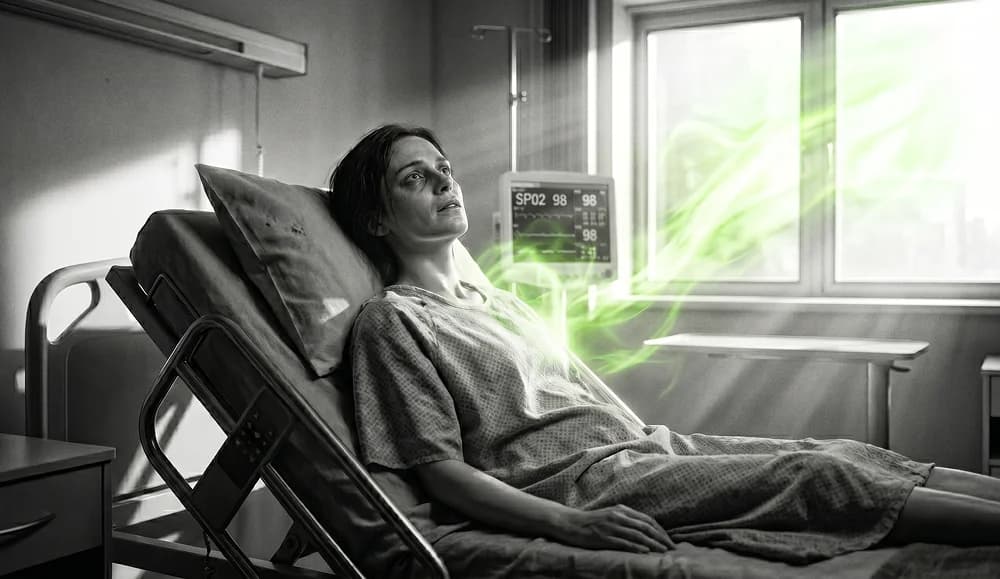
Clinical anecdote — not study-grade evidence: In the MedCram talk underlying this piece, Dr. Roger Seheult opens with the case of a 15-year-old boy: weakened by leukemia treatment, he develops a severe flesh-eating fungal infection (mucormycosis) in the lung. One lung is removed; the infection jumps to the other. Prognosis: terminal. His last wish: he wants to go outside, to fresh air. His bed is wheeled outdoors — and the unthinkable happens. Inflammatory markers drop, oxygen demand falls, the boy survives. Single cases are not proof of therapy, but they raise the question: which evolutionarily built-in healing mechanisms have we unlearned in our climate-controlled, artificially lit indoor world?
Dr. Roger Seheult, board-certified in internal medicine, pulmonology, and critical care (widely known through the MedCram education channel), has built his career on that question. His observations from the COVID-19 ICU suggest: the key to robust health often isn't expensive medicine, but evolutionarily ancient stimuli — light, heat, cold, movement, plant compounds.
An evolutionary dilemma: why we need the sun, yet it burns us
It looks like a design flaw of nature: the sun is essential to our survival — yet after a short time in the blazing midday sun, a painful sunburn looms. Did millions of years of evolution fail here?
The short answer: no. It isn't our biology that's poorly adapted — it's our way of life that contradicts our evolutionary heritage. According to environmental surveys, modern humans spend roughly 92–93% of their time indoors. Our deconditioned skin is then abruptly exposed, on a summer holiday, to the most intense radiation of the year — a classic evolutionary mismatch: a Stone-Age-calibrated body in an indoor world it was never built for. Sunburn is not the failure of adaptation but the bill for having unlearned the gradual, year-round acclimatization to light.
For hundreds of thousands of years, humans were exposed to the sun daily, in measured doses, year-round. The skin built seasonal protection (tanning, a slightly thickened horny layer), the sleep-wake rhythm was firmly coupled to the sun's position, and the full light spectrum — not just the UV-B for vitamin D — was a permanent biological input. Today we replace daylight with blue-heavy LED light behind glass, which filters out precisely the red and infrared fractions that act deep in tissue — and cram the missing dose into a few hours at the height of summer. Medical experts now call this chronic light deficiency the "scurvy of the 21st century": a deficiency we don't feel acutely because it builds over decades.
So the resolution of the dilemma is not "more" or "less" sun, but regular instead of episodic — the daily, moderate dose we're built for, rather than the rare overdose that burns.
The 8 pillars of health — the NEW START framework
Seheult works with a long-established lifestyle framework from the Seventh-day Adventist health movement (popularized via Hans Diehl and the CHIP program). It's old, but empirically remarkably robust:
| Letter | Pillar | Concretely |
|---|---|---|
| N | Nutrition | Plant-forward, nutrient-dense diet |
| E | Exercise | Movement — lowers stroke and depression risk |
| W | Water | Hydration + hydrotherapy (contrast showers, sauna) |
| S | Sunlight | More than just vitamin D — see below |
| T | Temperance | Deliberate avoidance of toxins (alcohol, nicotine, junk food) |
| A | Air | Fresh air, plant phytoncides |
| R | Rest | Sleep + intentional recovery |
| T | Trust | Meaning, spirituality, social trust — resilience reservoir |
Two of these — Sunlight and Water — carry the biochemically most interesting mechanisms that are systematically under-supplied in modern life.
Sunlight: The engine of our mitochondria
For a long time, the primary health benefit of sunlight was thought to be vitamin D synthesis via UV-B radiation. That's not wrong, but incomplete. The solar spectrum is much broader:
| Spectral range | Share of sunlight | Penetration depth | Main effect |
|---|---|---|---|
| UV-B (280–315 nm) | ~0.5% | top skin layer | Vitamin D synthesis, sunburn risk |
| UV-A (315–400 nm) | ~5% | deeper skin | NO release, tanning, photoaging |
| Visible light (400–700 nm) | ~40% | mm range | Circadian regulation, mood |
| Near-infrared / infrared (700–3000 nm) | ~50% | down to subcutaneous tissue | Mitochondrial stimulation, warmth |
That's the central surprise of recent years: roughly half of sunlight is infrared — invisible to the eye, but deeply active in tissue.
Subcellular melatonin as the cellular "coolant"
With increasing age or chronic disease, mitochondrial efficiency drops by an estimated 30–70%. The result is oxidative stress — a kind of "overheating" of the cellular engine.
Here lies the most exciting finding of recent years (Reiter et al. 2020): Near-infrared light stimulates mitochondria to produce melatonin locally inside the cell. This subcellular melatonin acts as a highly potent antioxidant right at the site of oxidative stress.
Important distinction: This is not the familiar "sleep hormone" released by the pineal gland in the evening to make you tired. Subcellular melatonin is a separate, autocrine form acting directly at the mitochondrion and unrelated to the sleep-wake cycle. Details on the classical, nightly melatonin live in Sleep science: chronotypes & melatonin myths.
Seheult reports from the COVID-19 ICU: patients with metabolic comorbidities (already "overheating" mitochondria) became severely ill. When these patients got 15–20 minutes of sunlight daily, oxygen saturation often improved measurably. Anecdotal — but mechanistically plausible.
Fact-check: penetration depth of infrared through clothing
In lectures Seheult sometimes cites that infrared light penetrates up to 8 cm into the body. Biophysically, that's optimistic:
| Source | Realistic penetration |
|---|---|
| Optical window of tissue (650–1350 nm) | a few mm to max. 2–3 cm |
| Therapeutic effective dose (photobiomodulation) | typically 0.5–3 cm penetration |
Why the systemic effect is still real: Light doesn't need to radiate 8 cm directly into internal organs. It's enough that well-perfused skin layers are reached. There it stimulates mitochondria in blood cells and vascular endothelium — and blood circulates through the whole body. So the biochemical effects distribute systemically.
That near-infrared passes through regular clothing (depending on weave and color) is physically correct — you feel it as the pleasant deep warmth of the sun even when bundled up.
Sun beyond vitamin D: the full spectrum of effects
Vitamin D is often just a biomarker that someone was outdoors at all — not the sole effect of the sun. Light acts on our biology through several independent channels:
| Effect | Mechanism | Established? |
|---|---|---|
| Mood ↑ (serotonin) | Light via skin and retina raises serotonin turnover in the brain | 🟢 well established |
| Wakefulness (melatonin ↓) | Daylight suppresses the sleep hormone melatonin → awake by day, sleepy in the dark | 🟢 well established |
| Blood pressure ↓ (NO) | UV-A releases nitric oxide from the skin → vasodilation | 🟡 moderate |
| Wound healing & pain (infrared) | Near-infrared stimulates mitochondria → faster healing, less pain | 🟡 moderate |
| Viral seasonality (heat/humidity) | Higher temperature and humidity reduce the stability and replication of many respiratory viruses | 🟡 moderate |
| Antimicrobial (UV) | UV inhibits microbes — the basis of technical UV sterilization | 🟠 context-dependent |
Sun and the psyche: the serotonin lever
When light hits skin and retina, serotonin turnover in the brain rises — the messenger closely tied to well-being and drive. That's the biochemical reason most people feel noticeably better on sunny days. Conversely, months of light deficiency (dark winters, rainy regions) can trigger seasonal affective disorder (SAD). Here light therapy is well studied: a 10,000-lux daylight lamp for 20–30 minutes in the morning is antidepressant in controlled SAD trials — and simultaneously sets the circadian rhythm. The nocturnal counterpart, the sleep hormone melatonin, is covered in detail in Sleep science: chronotypes & melatonin myths.
Fact-check — "UV through glass" against bacteria: In the heliotherapy era of tuberculosis sanatoria (before antibiotics) the sun was seen as a disinfectant, and the claim persists that UV inactivates pathogens like tetanus, typhoid, or TB "even through glass." Let's differentiate: strongly germicidal is mainly UV-C, used in technical sterilization — but ordinary window glass largely blocks UV-B and UV-C (only UV-A passes). The real benefit lies in environmental hygiene (sun disinfects surfaces, laundry, air) and in the indirect immune effect — not in sunbathing "burning out" an infection inside the body. The old sanatorium successes were real but rested on a bundle of light, fresh air, rest, and nutrition, not on a glass-UV miracle.
Evidence: Sun — risk vs. benefit
This is the most interesting question, long unilaterally communicated by dermatology. The answer isn't "more sun is always good," but: moderate, regular exposure without sunburn is net strongly health-promoting. Detail:
The risk side (real, but differentiated)
| Risk | What data shows |
|---|---|
| Melanoma | Mostly tied to intermittent intense sun + sunburns, especially in skin types I–II. Chronic moderate exposure is in several studies associated with lower melanoma risk (Newton-Bishop 2009). |
| Basal/squamous cell carcinoma | Grows with cumulative lifetime dose — relevant at chronically high loads, but rarely fatal. |
| Photoaging | Wrinkles, pigmentation — cosmetic, not life-threatening. UV-A primary. |
| Acute sunburn | Direct DNA damage — always avoid, hard limit. |
The benefit side (long under-communicated)
| Benefit | Mechanism + evidence |
|---|---|
| All-cause mortality ↓ | Lindqvist 2014/2016 (Karolinska / Melanoma in Southern Sweden cohort, 30,000 women, 20+ years): women who actively avoid sun have double the mortality risk of women with highest sun exposure. Effect comparable to quitting smoking. |
| Cardiovascular | UV-A releases nitric oxide (NO) from skin → systemic vasodilation → lower blood pressure (Liu 2014). |
| Vitamin D status | The needed UV-B fraction is only achievable through skin exposure or supplementation. Deficiency is epidemiologically common in temperate climates Oct–April. |
| Mitochondrial function | NIR stimulation, subcellular melatonin (above). |
| Circadian anchoring | Morning light synchronizes the cortisol peak; evening light avoidance protects nocturnal melatonin. |
| Mood | Light exposure stabilizes serotonin tone; seasonal deficit → SAD. |
What newer large studies show
Three more recent works sharpen the picture — and support the benefit side:
- UK Biobank (Weller group, 2024): In the largest analysis to date (over 370,000 participants, median 12.7 years), people with the most active sun exposure had a lower mortality risk — roughly −14% all-cause (HR 0.86) and −19% cardiovascular (HR 0.81). Important context: the net effect stayed positive even though melanoma incidence can rise with more sun — the mortality balance favors moderate, regular exposure, not sunburns.
- 670 nm red light & the aging eye (Shinhmar/Jeffery, UCL 2020): Just three minutes of deep-red light in the morning reactivated mitochondria in the retina and measurably improved color-contrast perception — especially in people over 40. A striking example that the red and infrared fractions of light act independently on our cellular power plants.
- Infrared in COVID-19 (Pereira et al., Brazil 2022): In a small randomized pilot trial (n=30), hospitalized COVID patients received 15 minutes of 940 nm infrared daily via an LED vest. Hospital stay shortened by about a third (statistically significant). Given the tiny sample this is a signal, not proof — but mechanistically consistent with the mitochondrial thesis.
Synthesis — the honest 2026 position: The old dermatological "always avoid sun" doctrine is outdated. Modern data show that chronic sun deficiency is an independent mortality factor — and stronger than melanoma risk under reasonable exposure. The right middle:
- 15–20 min midday sun on a large skin area (arms + legs), skin-type-adjusted (Type I–II ~10 min, Type V–VI 30–40 min)
- Never sunburn — the one hard limit
- Sun protection for prolonged exposure (hat, shade, then sunscreen) — physical protection beats chemistry
- In winter / on deficiency supplement vitamin D (see Vitamin D3 + K2)
Fever as a weapon: hydrotherapy and the innate immune system
Beyond the adaptive immune system (antibodies after vaccination/infection), humans have an innate immune system — the rapid-response force. One of its key weapons: interferon, a protein that blocks viral replication.
Interferon production is temperature-dependent
When the body develops fever, core temperature rises from ~37°C to 38.5–39°C. Studies on lymphocytes and systematic reviews (Evans 2015, Nature Reviews Immunology) show: at these temperatures interferon production is significantly elevated — depending on subtype and study, by a factor of 3 to 10.
Consequence: Suppressing fever purely symptomatically with paracetamol or ibuprofen, without medical necessity, robs the body of its strongest antiviral response. For vulnerable groups (small children, pregnant, comorbidities) different rules apply — but for a healthy adult with moderate fever, "endure and sleep through" is often the immunobiologically better choice.
Hydrotherapy — creating the warmth artificially
| Stimulus | Effect | Practical |
|---|---|---|
| Heat (sauna) | Artificial "fever," interferon boost, heat-shock proteins | 4× per week 20+ min — Laukkanen 2015 (JAMA Intern Med): cardiovascular mortality −50%, dementia −66% |
| Cold (ice bath, cold shower) | Vasoconstriction → leukocyte demargination → patrol boost; brown adipose tissue activation | 30 sec to 2 min after the heat |
| Contrast shower | Mini version, very daily-doable | Final phase 30 sec cold |
The demargination effect is mechanistically clean: at rest, some white blood cells "stick" passively to vessel walls. Cold stimulus → vessels contract → these cells get flushed into the bloodstream and actively patrol again.
Phytoncides: The pharmacy of the forest
Japanese research on forest bathing (Shinrin-Yoku) has opened a further, light-spectrum-independent healing domain. Trees release phytoncides — volatile essential compounds (especially α-pinene, limonene, camphene) that protect them against insects and fungi.
What happens in humans (Li 2010, Environmental Health & Preventive Medicine):
- NK cells (natural killer cells) rise by ~50% after a 2-day forest stay
- Effect lasts up to 7 days after return
- CRP (chronic inflammation marker) measurably drops
- Cortisol daily profile normalizes
Practically: one longer forest walk per week delivers immunological effects lasting weeks. Urban green helps too, but forest > park > grey city.
Practical application: The light-warmth-nature weekly routine
Bringing the eight NEW START pillars into an actionable week:
| Stimulus | Frequency | Dose | When |
|---|---|---|---|
| Midday sun | daily | 15–20 min, arms + legs exposed | 11:00–14:00 |
| Morning light | daily | 5–10 min outdoors | first hour after waking — circadian anchoring |
| Sauna | 3–4× / week | 20 min, 80–90°C | after training or evening |
| Cold stimulus | daily (contrast shower) | 30 sec cold at end | right after warmth |
| Forest bathing | 1× / week | 1–2 hours | weekend |
| Screen detox | daily | 90 min before sleep | blue-light avoidance — protects nocturnal melatonin |
| Vitamin D3 + K2 | Oct–Apr | per blood level | morning, with fat |
This routine is free (except sauna membership) and better-evidenced than most expensive supplements. See What is longevity? for the overall context, and Exercise & longevity for the strength-training pillar.
Conclusion
We are at the core the scurvy patients of the 21st century — only we're not lacking vitamin C, but real sunlight, thermal stimuli, plant air, and movement in natural settings. About 90% of our lifetime, per EPA estimates, is spent indoors — isolated from precisely those stimuli for which our biology was optimized over hundreds of thousands of years.
The way back doesn't require quitting modern life — just deliberate mini-adaptations:
- 15 min of unprotected daylight on skin, daily
- Contrast showers as mini-hydrotherapy
- Screen detox in the evening, so the pineal gland can work
- One hour of forest per week
- Vitamin D in winter once the level drops
- Social + spiritual connection as a resilience reservoir
That sounds unspectacular. But: the unspectacular is precisely what makes the difference across decades in longevity research. While the pharma industry works on the next wonder molecule, the biggest lever still lies in the sun, the cold water, the forest path — and in the consistency we bring there every single day.
- [1]Dr. Roger Seheult / MedCram — basis for this piece (lecture & interview)
- [2]Reiter et al. (2020): Melatonin and the Optics of the Human Body — Melatonin Research
- [3]Ash et al. (2017): Effect of wavelength and beam width on penetration in light-tissue interaction — Lasers in Medical Science
- [4]Lindqvist et al. (2016): Avoidance of sun exposure as a risk factor for major causes of death — Journal of Internal Medicine
- [5]Lindqvist et al. (2014): Avoidance of sun exposure is a risk factor for all-cause mortality — J Intern Med
- [6]Newton-Bishop et al. (2009): Serum 25-OH-D, sun exposure and melanoma survival — Journal of Clinical Oncology
- [7]Liu et al. (2014): UVA irradiation, nitric oxide release & blood pressure — Journal of Investigative Dermatology
- [8]Evans et al. (2015): Fever and the thermal regulation of immunity — Nature Reviews Immunology
- [9]Laukkanen et al. (2015): Sauna bathing and cardiovascular & all-cause mortality — JAMA Internal Medicine
- [10]Li (2010): Effect of forest bathing trips on human immune function — Environmental Health & Preventive Medicine
- [11]Holick (2017): Vitamin D Deficiency — current consensus paper
- [12]Stevenson/Weller et al. (2024): Higher ultraviolet light exposure is associated with lower mortality — UK Biobank cohort (~370,000 participants)
- [13]Shinhmar/Jeffery et al. (2020): Optically improved mitochondrial function redeems aged human visual decline (670 nm red light) — J Gerontol A Biol Sci Med Sci
- [14]Pereira et al. (2022): Cardiopulmonary effects of infrared LED photobiomodulation (940 nm) in SARS-CoV-2 — randomized pilot trial (n=30)