Spermidine: Autophagy Hype vs. the Evidence
Spermidine induces autophagy and shows striking animal data, but the SmartAge RCT found no memory benefit and capsules barely raise blood levels. What the science really says.

Spermidine has become the poster child of the autophagy era: a "fasting in a capsule" molecule promising cellular renewal, a longer heart-span, and a sharper memory. The mechanistic story is genuinely elegant, and the animal data are some of the most impressive in the entire longevity field. But there is a gap that most marketing quietly skips over — the only rigorous human supplement trial found no cognitive benefit, and pharmacokinetic work suggests the capsule barely moves your blood spermidine at all. So is spermidine a real caloric-restriction mimetic worth taking, or an anti-aging story that fell apart the moment it met a placebo group?
Evidence at a glance
| Claim | What the evidence shows | Verdict |
|---|---|---|
| Induces autophagy / acts as a caloric-restriction mimetic | Strong, multi-species mechanism; cardioprotection vanishes in autophagy-knockout mice | 🟢 strong (mechanism) |
| Higher dietary intake linked to lower mortality | Bruneck cohort (n=829): top vs. bottom third ≈ a 5.7-year age difference — but observational | 🟡 moderate |
| Extends lifespan / protects the heart | Robust — in yeast, flies, worms and mice. Not shown in humans | 🔴 weak (humans) |
| Improves memory in older adults | 30-person pilot hinted at it; the 12-month SmartAge RCT (n=100) found nothing (P=.47) | 🔴 weak |
| A capsule raises your spermidine levels | Pharmacokinetic RCT: 15 mg/day did not raise plasma or salivary spermidine | 🔴 false |
What spermidine actually is — and how it works
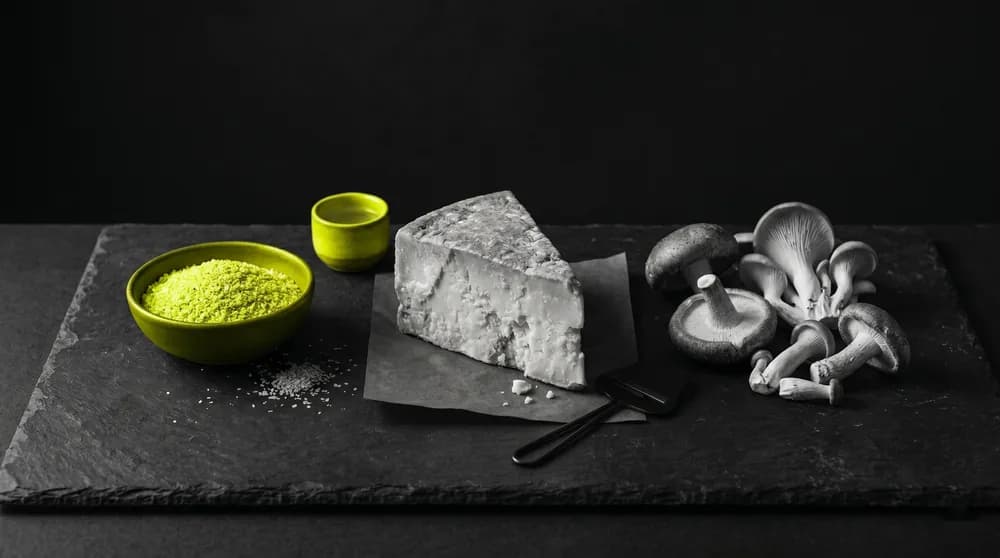
Spermidine is a naturally occurring polyamine — a small molecule your body makes on its own, supplemented by your gut microbiome and by what you eat. It is not exotic: aged cheese, wheat germ, mushrooms, soy and natto, legumes and whole grains all deliver it daily.
Its best-characterized action is inducing autophagy — the cell's self-cleaning program that recycles damaged proteins and worn-out organelles. Mechanistically, spermidine inhibits acetyltransferases (notably EP300), which tips the cell into the same fasting-like, mTOR-suppressed state you get from caloric restriction. That overlap is why researchers call it a caloric-restriction mimetic. It also drives the hypusination of the translation factor eIF5A, which supports mitochondrial function.
Wichtig: Almost all of this mechanistic and lifespan evidence comes from yeast, worms, flies and mice. The autophagy dependence is not hand-waving — in Eisenberg's 2016 work, spermidine's cardioprotection completely vanished in mice whose heart cells lacked the autophagy gene Atg5. The mechanism is real. Whether it translates into a measurable human benefit is a separate question.
For the broader picture of where spermidine sits among evidence-tiered longevity compounds, see our longevity supplements list.
What is actually proven
Let us separate the well-supported from the aspirational, honestly.
Autophagy induction (strong mechanistic basis). Across yeast, nematodes, flies and mammalian cells, spermidine reliably triggers autophagy, and the downstream benefits in animals depend on it. This is the molecule's strongest card — but it is a mechanism, not a clinical outcome.
Dietary intake and mortality (moderate, observational). The standout human dataset is the Bruneck study (Kiechl et al., 2018): a prospective cohort of 829 adults aged 45–84, with 341 deaths over roughly 20 years. People in the highest third of dietary spermidine intake (intakes ranged from about 9 to 11.5 mg per day) had lower all-cause mortality than the lowest third — a gap the authors estimated corresponded to a 5.7-year age difference.
Einordnung: This is an association, not causation. People who eat more spermidine eat more whole grains, legumes and vegetables — the kind of diet that lowers mortality for many reasons. A cohort cannot isolate the polyamine from the dietary pattern around it. It is suggestive, not proof.
Cardioprotection and lifespan (animal only). Eisenberg's 2016 Nature Medicine paper is the headline animal study: oral spermidine extended lifespan in mice, reduced cardiac hypertrophy in mice and Dahl salt-sensitive rats, and preserved mitochondrial and telomere health. Genuinely impressive — and entirely in animals. No human trial has shown a longevity or hard cardiovascular endpoint.
Cognition (weak, contradicted). A 30-person, 3-month pilot RCT (Wirth et al., 2018) reported a modest memory signal (Cohen's d ≈ 0.77). That generated real excitement — until the proper test arrived.
The overrated and the outright false
This is the section the supplement labels would rather you skip.
"Spermidine extends human lifespan / reverses aging." Lifespan extension exists only in yeast, flies, worms and mice. The sole human signal is the dietary Bruneck association — which cannot establish causation. No randomized trial has shown a longevity or hard-clinical benefit in people. The "anti-aging miracle pill" framing is not supported.
"It improves memory and prevents cognitive decline." The definitive test, SmartAge (Schwarz, Wirth et al., 2022, JAMA Network Open), was a 12-month placebo-controlled RCT in 100 older adults with subjective cognitive decline (51 spermidine, 49 placebo, 0.9 mg/day from wheat germ). The primary memory outcome showed a between-group difference of -0.03 (95% CI -0.11 to 0.05), P=.47 — no effect, in the direction of nothing. A longer, larger, better-powered trial simply did not replicate the pilot.
"Taking a capsule raises your spermidine." A randomized pharmacokinetic study (2023, Nutrients) gave 15 mg/day — far above typical products — to 12 healthy adults. It did not raise plasma or salivary spermidine; the dose was largely converted to spermine. Most supplements deliver only ~1–6 mg/day, far below the body-weight-scaled doses used in mouse work.
"Branded buckwheat or synthetic versions are equivalent and EU-approved." Only spermidine-rich wheat-germ extract (Triticum aestivum) is authorized as an EU Novel Food (Reg. (EU) 2020/443, max 6 mg/day). Buckwheat-based versions are not authorized, and no EFSA health claim for spermidine is permitted — so anyone implying an approved anti-aging effect is overstepping.
"More is always better." Polyamines are essential growth substrates for all proliferating cells — including tumor cells. That makes the dose-response anything but a simple "more is better."
Safety and interactions
Caveat — this is the part to take seriously. Polyamines fuel cell proliferation, and tumor-derived spermidine can suppress CD8+ T-cell anti-tumor immunity. Lifelong supplementation did not raise cancer incidence in mice, but the concern that supplemental spermidine could feed an existing tumor is biologically grounded. People with cancer, or undergoing cancer treatment, should not self-supplement and should use spermidine only after medical consultation.
Germany's Verbraucherzentrale advises anyone on immunosuppressive medication to use spermidine preparations only after consulting a doctor. It also notes that no benefit of supplements has been demonstrated in healthy people, that long-term high-intake risks cannot be excluded, and on balance it advises against supplements in favor of food-based intake.
The EU caps authorized wheat-germ-extract supplements at 6 mg/day; "high-dose" products exceeding that fall outside the authorized novel-food specification. There are no safety data in pregnancy or children — not recommended there. Food-based intake within a normal diet has no known safety concerns.
None of this is medical advice — if you have a chronic condition or take prescription medication, talk to your physician before adding any supplement.
Practical take: dosing, buying, and the food alternative
If you still want spermidine, the evidence points clearly toward food first. The numbers make the case: roughly 0.5 mg of spermidine — a typical daily supplement dose — is matched by about 2.5 g of cheddar or 50 g of cooked cauliflower. A diet built on whole grains, wheat germ, aged cheese, mushrooms, soy/natto and legumes delivers spermidine in the exact context the Bruneck association was observed in — and with none of the cancer or immunosuppression caveats that attach to isolated high doses.
If you choose a supplement anyway:
| Decision | Evidence-based choice |
|---|---|
| Source | Wheat-germ extract (Triticum aestivum) — the only EU-authorized novel food |
| Dose ceiling | ≤ 6 mg spermidine/day (authorized limit) |
| Avoid | Unauthorized buckwheat/synthetic products and "high-dose" claims above 6 mg |
| Expectation | Do not expect blood spermidine to rise, or a measurable memory effect |
You can find our structured entry for the compound on its spermidine product page.
Who is it actually for?
Honestly: nobody has a proven need for a spermidine supplement yet. There is no validated blood marker to "measure low spermidine" and correct it — and even if there were, the pharmacokinetic data suggest a capsule would not move it. The strongest case is dietary: if your diet is light on whole grains, legumes and vegetables, shifting toward spermidine-rich whole foods is a defensible, low-risk move that happens to improve your diet on every other axis too.
Bottom line
Spermidine is a genuine, autophagy-inducing polyamine with some of the most impressive animal lifespan and cardiac data in longevity science, and a suggestive observational link between higher dietary intake and lower mortality. But the one rigorous human supplement RCT found no cognitive benefit, capsules barely raise blood spermidine, and supplements carry a real cancer and immune caution. The evidence-supported move is food-based intake. The "anti-aging miracle pill" framing is, for now, hype — and an honest reading of the trials says so plainly.
- [1]Kiechl S et al. (2018): Higher spermidine intake is linked to lower mortality — a prospective population-based study (Bruneck) — Am J Clin Nutr 108(2):371-380
- [2]Schwarz C, Wirth M et al. (2022): Effects of Spermidine Supplementation on Cognition and Biomarkers in Older Adults With Subjective Cognitive Decline (SmartAge RCT) — JAMA Network Open
- [3]Wirth M et al. (2018): The effect of spermidine on memory performance in older adults at risk for dementia (pilot RCT) — Cortex 109:181-188
- [4]Senekowitsch S et al. (2023): High-Dose Spermidine Supplementation Does Not Increase Spermidine Levels in Blood Plasma and Saliva of Healthy Adults (pharmacokinetic RCT) — Nutrients 15(8):1852
- [5]Eisenberg T et al. (2016): Cardioprotection and lifespan extension by the natural polyamine spermidine — Nature Medicine 22(12):1428-1438 (animal)
- [6]Madeo F et al. (2019): Spermidine — a physiological autophagy inducer acting as an anti-aging vitamin in humans? — Autophagy 15(1):165-168 (mechanism review)